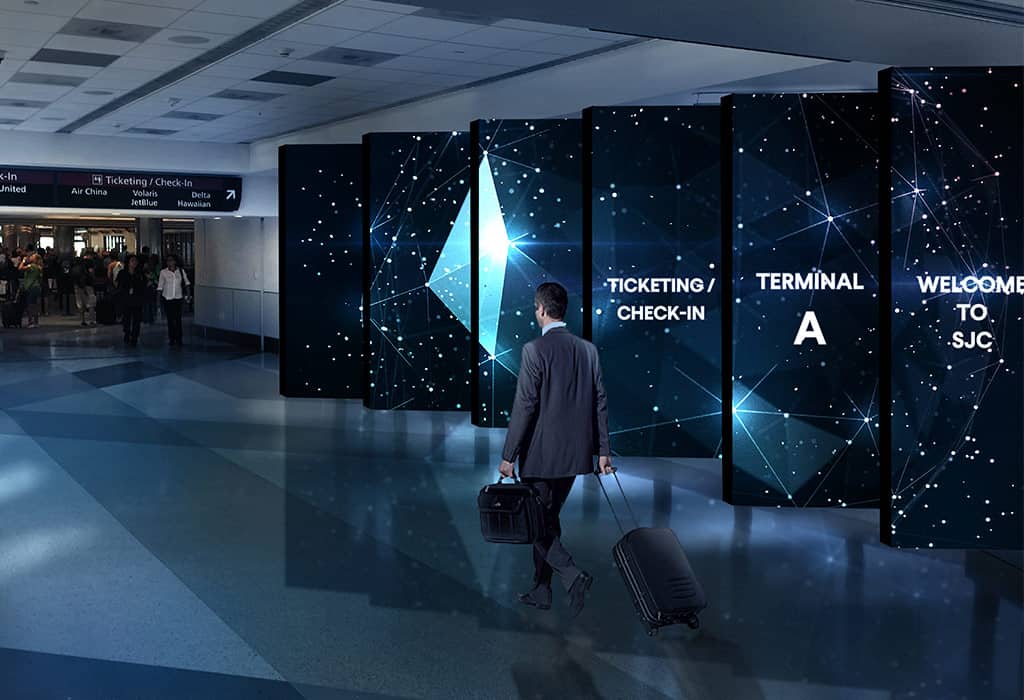
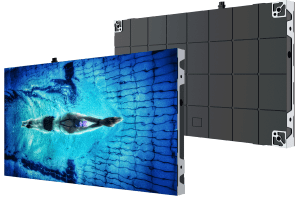
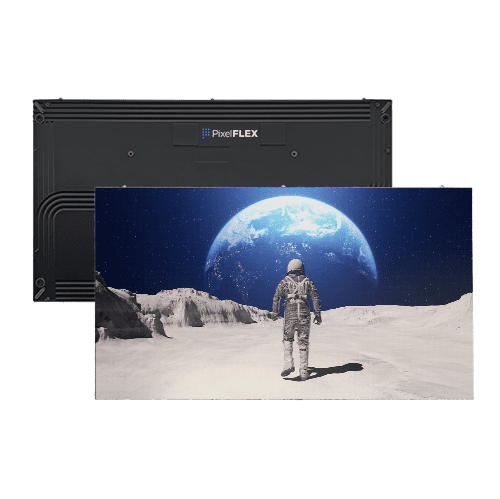
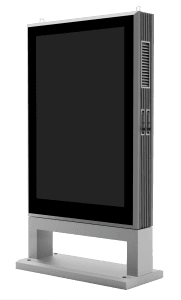
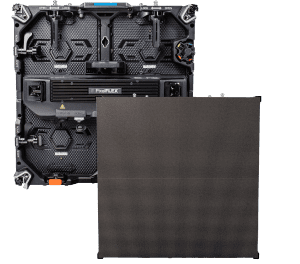
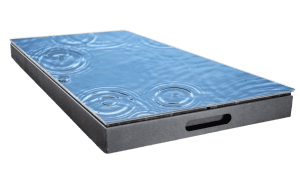
LED displays in transportation settings, such as airports, train stations, and bus terminals, serve as dynamic platforms for real-time information, advertising, and wayfinding, enhancing passenger experience with clear, up-to-date travel details and announcements.
We offer creative solutions at cost-effective rates. You will be able to deliver your sermons more effectively and engage your congregation through one-of-a-kind lyric video walls and house of worship LED displays.
Digital signage is an incredible tool for broadcasting content, message dissemination, and advertising. It has applications in virtually every market and sector, from academia to retail to places of worship, both indoor and out. Today’s cutting-edge flat or curved displays add a touch of modernity and aesthetic beauty to any space. However, digital signage technology evolves quickly, and can seem confusing to the uninitiated. To get the most out of their digital display investment, it is advisable that consumers learn some key terminology which can empower them to make a more informed purchasing decision.
I don’t think there is a need for the LCD Display Mention. Unless we discount it by saying it has color calibration issues and Burn in. Led does not have burn in. Maybe we say today we will focus on LED Digital signage.
● LCD Display: A flat-panel display using liquid crystals via a backlight or reflector to produce images.
● LED Display: A display solution utilizing light-emitting diodes as pixels for a video display.
● LED: A light-emitting diode (LED) made up of a two-lead semiconductor which emits light when activated, offering lower energy consumption, longer life, and availability in sizes smaller than traditional light sources.
● Video Wall: A video wall employing multiple displays, tiled or overlapped, to form what appears to be one large screen.
● Pixel: A physical point in a raster image; the smallest controllable element of a picture represented on a display.
● LED Density: Indicates the quantity of LEDs per display or square meter, with greater density translating to higher brightness and higher resolution.
● Pixel Pitch: The distance between pixels center to center on a display screen, usually reserved for LED display technology.
● Fine Pixel Pitch: LED displays with a minimum amount of space between pixels, usually 2.5mm or less; narrow pixel pitches yield clearer displays when viewed up close.
When it comes to LEDs, there is more that consumers should understand as part of their research. LEDs do not use filaments, making them highly efficient as nearly all of the electricity is converted to light rather than heat. This efficiency also displays itself in maintenance costs. Filaments and light engines in standard lights burn out as a result of this heat. The frequent replacement of these parts is costly. LEDs require less time and money to maintain. However, LED displays do require a module replacement every few years, depending on usage.LED diodes naturally lose about 20% of their initial brightness after the first 2,000 hours of use (or 3 months), and that brightness will slowly degrade until it dies at about 100,000 hours (or 11 years). Thus, it is important to note that the manufacturer’s claimed display brightness will drop about 20% after 2 to 3 months of operation.
Buyers should also ask the following questions when shopping for digital displays:
1.) How does the unit stay cool?
2.) Where is the device’s service access point? How is it serviced?
3.) Is the display good for both indoor and outdoor use? Only indoor? Only outdoor?
4.) Who manufactures the driver and switch integrated circuits (ICs)?
5.) Do all pixels come from the same bin?
6.) Is the fill factor of the screen (how much of the screen is covered by light-emitting pixels) at least 40%?What % is the fill factor of the screen?
Digital signage can be of great advantage, but only if the solution meets an organization’s unique needs. Through education and asking the right questions, consumers can ensure their satisfaction with their display, and PixelFLEX®, your partner in digital signage, is pleased to clarify these concepts. Put your new LED knowledge to use and check out the PixelFLEX products page!
Visit LED University
When buying an LED display, no one wants to overpay by purchasing a higher resolution than is required to do the job. On the other hand, you want to purchase a display that delivers a crisp, clear picture to the intended audience. To ensure you are buying exactly the display you need and no more, it is essential to understand how viewing distance and resolution correlate.
Recommended viewing distances are somewhat subjective, but can be roughly calculated based on the resolution, display type, application, and intended use. The higher the resolution you have, the clearer your content will appear. Text size is another important consideration. In general, larger characters can be viewed from a longer distance at a lower resolution.
Resolution in an LED display is the result of a specification called pixel pitch. Pixel pitch describes the spacing of individual pixels. In the case of a color display, it is the physical distance measured in millimeters between the center of an LED diode and the next closest diode on the board. Generally speaking, the larger the pitch number, the lower the resolution of the display with more pixelization. Likewise, the lower the pitch number, the higher the resolution will be, resulting in less pixelization. As a rule of thumb, each time pixel pitch is reduced by a millimeter, a viewer can stand one meter closer to the display.
Resolution is proportional to the number of pixels contained in the physical area of your LED display. The more pixels you have per square meter, the more detail your wall will display. When viewed from the recommended minimum viewing distance, these pixels will appear connected, giving a smooth, colorful image, without the appearance of any spaces between pixels or separation of the LEDs. In addition to pixel pitch, the effective resolution is also influenced by display size, pixel technology, and viewing distance.
Each display has a recommended minimum viewing distance that may vary based on the application and the intended use. Understanding how viewing distance and resolution correlate can help you choose the right product to meet your unique needs, potentially saving you a ton of money. When choosing a digital display, consider the ideal viewing distance from the sign to help choose the correct pixel pitch.
At PixelFLEX ®, we want to educate our customers so they purchase the correct product and don’t overbuy. We offer a large variety of award winning LED display systems that provide clear and detailed images in virtually any size and shape screen you desire. The experts at PixelFLEX ® will help you choose a quality solution that makes your creative vision a reality.
To learn more about how PixelFLEX ® can help you meet your business goals, visit PixelFLEXLED.com today! Also, Visit our LED University page to get a little more in depth on this topic above.
At long last, it’s time to install that show-stopping video wall you’ve been planning. You want it to be bright, flexible, energy-efficient, and cutting-edge—something truly unique and exciting!
But which kind of display should you use?
Until recently, most large-format video walls were built using LCD displays arranged in standard configurations: 2X2, 3X3, 4X4 and so on. This was the preferred method for achieving large video images due, in part to the cost of LED display technology. But now, with efficient, brighter LED technologies and manufacturing techniques, large-format LED displays are economically comparable with the older LCD matrix video walls they so easily outperform.
Liquid crystal displays (LCD) have been popular for years in both the video wall and consumer electronics markets. You have probably already used LCD technology several times already today and the technology is perfect for smartphones, computer monitors, and television screens. But when LCD displays are tiled together to create a video wall, the bezels (or visible edges of the cabinet) create “mullions” which interrupt the video image. Even when expensive “ultra-thin-bezel” displays are used, the mullions are still there dividing the image. Direct View LED panels assemble together with no visible bezels forming completely seamless video walls.
Recent innovations in LED manufacturing allow more brightness, higher resolutions, greater reliability and energy-efficiency than LCD displays with the best color accuracy and refresh rates of any display type available. For large-format video experiences, Direct View LED is the obvious choice. Here’s a quick comparison:
LCD monitors have bezels which interrupt the image
LCD monitors can exhibit “burn in” of an image type over time
LCD video walls require special pullout mounting brackets that allow precise physical alignment and are typically pretty thick
LCD monitors require frequent color calibration and physical alignment to keep them looking good
LCD monitors by their very nature prevent smooth curves
LCD monitors used with complex, non-standard designs require expensive image processors with outputs for each display
LCD video wall displays typically have much lower brightness levels than LED
LCD video wall displays are not available in outdoor configurations
LED displays have no bezels to interrupt the image
LED displays don’t require pullout brackets and the entire display including the framing can be 3″ thick or less
LED displays typically don’t require color calibration and the physical alignment does not change over time
LED displays offer greater shape flexibility including non-standard flat displays, curves, cylinders, thin ribbons, and outside corners
LED displays are controlled differently with a single processor and only a few outputs required to drive very large displays
LED displays perform better in high ambient lighting conditions than LCDs (even outdoors)
LED displays provide a wider viewing angle due to its direct emission of light
LED technology Is very robust and reliable, even in high humidity and in a wide range of temperatures
Numerous display technologies are available today. Each has value, but the unique characteristics of LED displays may better suit your needs. And LED provides a lower total cost of ownership. LED is more energy-efficient, requires virtually no periodic maintenance, installs quicker, and has a longer usable lifespan than LCD video walls.
America-based LED manufacturer PixelFLEX offers creative solutions, reliable products, and dependable service for our industry-leading LED display technologies and solutions. Driven toward excellence to meet your standards, PixelFLEX offers an award-winning line of LED video walls and video screens to fit your every need. To learn more, visit PixelFLEXLED.com today!
LED displays increase productivity and educate and entertain customers and there are several exciting new technologies coming down the pike for 2017. Business leaders…stand up and take note: new and improved fine pixel pitch LED display solutions will enable novel applications in many different sectors, including sports venues, retail, restaurants, healthcare, entertainment, and much more. PixelFLEX, an industry leader in digital LED displays & signage, can provided customized indoor and outdoor solutions, all assembled and supported in the U.S.
Trends for 2017
Think of the most visually exciting graphic display ever seen in a sci-fi movie, and chances are excellent the same technology is becoming available to businesses today – at increasingly affordable rates. According to Transparency Marketing Research (TMR), the high initial cost of fine pixel LED technology will fall in coming years as growing competition, along with advances in R&D, work to bring costs down. Look for:
Growth of flexible/curveable LED displays, such as the PixelFLEX FLEXMod, an extremely high-resolution, flexible rubber substrate LED product that can create compound curves, and quickly and securely attaches via magnets to virtually any surface, allowing for a unique no-fan, no-noise design guaranteed to attract attention.
More pixels. New enhanced picture, 4K technologies will meet requirements for large-sized ultra-high-definition (UHD) displays in applications such as air traffic control, where every detail counts, as well as command centers and corporate lobbies. PixelFLEX offers ultra-high resolution as low as 1.2mm in the FLEXUltra model. And the company just announced the TrueFLEX 1.9mm pitch option, which is one of the highest resolution flexible LED products now on the market.
Virtual reality will become even more popular, and not just for gaming. Applications such as architecture, medicine, military, etc., are expanding rapidly. But VR is not just for headsets. At the September 2016 LDI Conference and Tradeshow in Las Vegas, PixelFLEX demonstrated a true 3D LED visual experience, treating visitors to an Augmented Reality Rave.
“With our new AR-LED technology with Partner 3D Live we can create a visual image that physically and optically comes off the LED screen for a true Augmented Reality experience no matter if you are five or 500 feet away from the source,” said Alex Williams, PixelFLEX Director of Project Management.
PixelFLEX also recently announced a new partnership with SpaceView, an Augmented Reality technology that provides near-instantaneous and accurate product installation renderings.
Increased return on investment. LED video walls and screens create impactful first impressions, and showcase professional competencies – and compared with a TV projection wall, maintain brightness much longer, with a 100,000-hour half-life. Stunning new UHD videos will enable branding messages and logos to compete for attention in the age of HD smart phones and tablets.
More immersive, interactive, and artistic designs. Merging the digital and physical worlds through the deployment of the FLEXLite NXG displays, curved and flexible displays like TrueFLEX, and the LumiFLEX interactive LED floor,there is the potential for even more creative engagements by both viewers and creators.
Memorable, unique experiences. PixelFLEX is continually increasing the functionality of our award-winning LED technologies, whether it’s a captivating trade show experience or a bright, high-performance FLEXCurtain HD LED video wall that requires minimal tech time to pack and unpack on tour. For PixelFLEX, each project is unique, and we pride ourselves on creating custom solutions for each individual customer. Working with architects, designers, engineers and consultants to blend LED displays with an environment is our specialty.
About PixelFLEX
Engaging customers is imperative. The experienced team at PixelFLEX can help develop creative solutions from our large variety of award winning LED displays. We can create nearly any size and shape screen you desire – with pixel sizes from 1.2 mm to 100mm – in outdoor, indoor and curvable configurations. Our LED seamless display systems provide clear and detailed imaging, whether viewed from just a few feet or hundreds of feet away.
We are dedicated to providing top tier customer-focused support throughout the entire design, build, and buy or rental experience – including after-purchase support and service. As a U.S.-based company, we are driven to excellence and pledge to meet a high standard of support.
At PixelFLEX, we understand how quickly LED technology is evolving as prices are dropping. We want our valuable customers to be aware of the unique and affordable display solutions available to help their businesses grow. To learn more about PixelFLEX, visit pixelflexled.com.
Each unique project begins with an idea, concept or vision that some may not have even thought was possible. As creative LED video wall displays and digital signage continue to see dramatic increases in popularity, more companies than ever are beginning to offer products and services to meet the high demand. With this increase in providers, thorough research is essential to ensure that a company’s product and service can successfully bring your project to life. Here’s a look at a few of the questions you should consider before diving head first into your LED video wall project.
What are you trying to create?
There are many uses for LED video displays beyond that of a traditional square or rectangle design. There are magnetic, rubber, cast, and aluminum based products that serve a number of unique purposes. Just because a company appears to have done a lot of large scale work, this does not necessarily make them the best fit for your project.
Does the product exist to make your vision a reality?
Often, architects and designers may pitch concepts and ideas using LED video products before doing research to make sure that a solution exists for that application. The LED video display industry is rapidly advancing its products and capabilities on a technical playback side as well as the physical attributes of the displays themselves.
Is the design feasible and is it serviceable?
The market can often limit the mind of its creativity, but making sure the LED Video design is feasible both physically and financially is the best place to start. A final install can look incredible, but if you cannot easily service the display in the event of product failure then you may have a lot of costs on the back side of the installation you were not expecting. Making your LED video display design works from a support and service standpoint will save you a lot of headaches.
Who have they worked with?
Have they worked with large fortune 500 companies? Can they provide quality references from clients? What type of work have they done primarily? Appropriately educating yourself about your potential LED provider can help ensure that your project will go more smoothly.
Does the provider have the resources to provide service before, during and after the installation?
Often times, people only see the end goal in mind, overlooking the bigger picture. Will the company you choose have project managers, technical sales reps, and accessible post sale technical support? Making sure you feel comfortable with your provider after they have your money is most important to the successful longevity of your LED video display
Is the company you’re looking at trying to sell you what you need?
This is one thing that you need to look at very hard. While each project has a product that can meet the basic requirements you need to optimally create your video design, there is often a slightly better option that the client wants. Make sure your provider is giving you product options and be sure to ask for a product demo. This will allow you to feel 100% comfortable in your choice of both provider and LED video product.
Can your LED video display provider grow with you and your long term vision?
Every company has a growth plan, and future projects in mind. Making sure your provider can grow with you and your long term ideas and goals is something that is often overlooked when making the investment into LED video displays. Keeping in mind your future growth needs, your LED video investment should serve you for at least five to ten years depending on your specific application.
When selecting a LED Video Display company, they should guide you through the purchase and installation process and provide routine maintenance and service. Be sure to choose an sign company that is experienced in LED sign installation and service. Ask for and check references, and if you have the opportunity for a facility tour, take it. As always, PixelFLEX LED video displays are sold exclusively through our network of dealer partners, and we’d be more than happy to guide you through that process as your partner along the way.
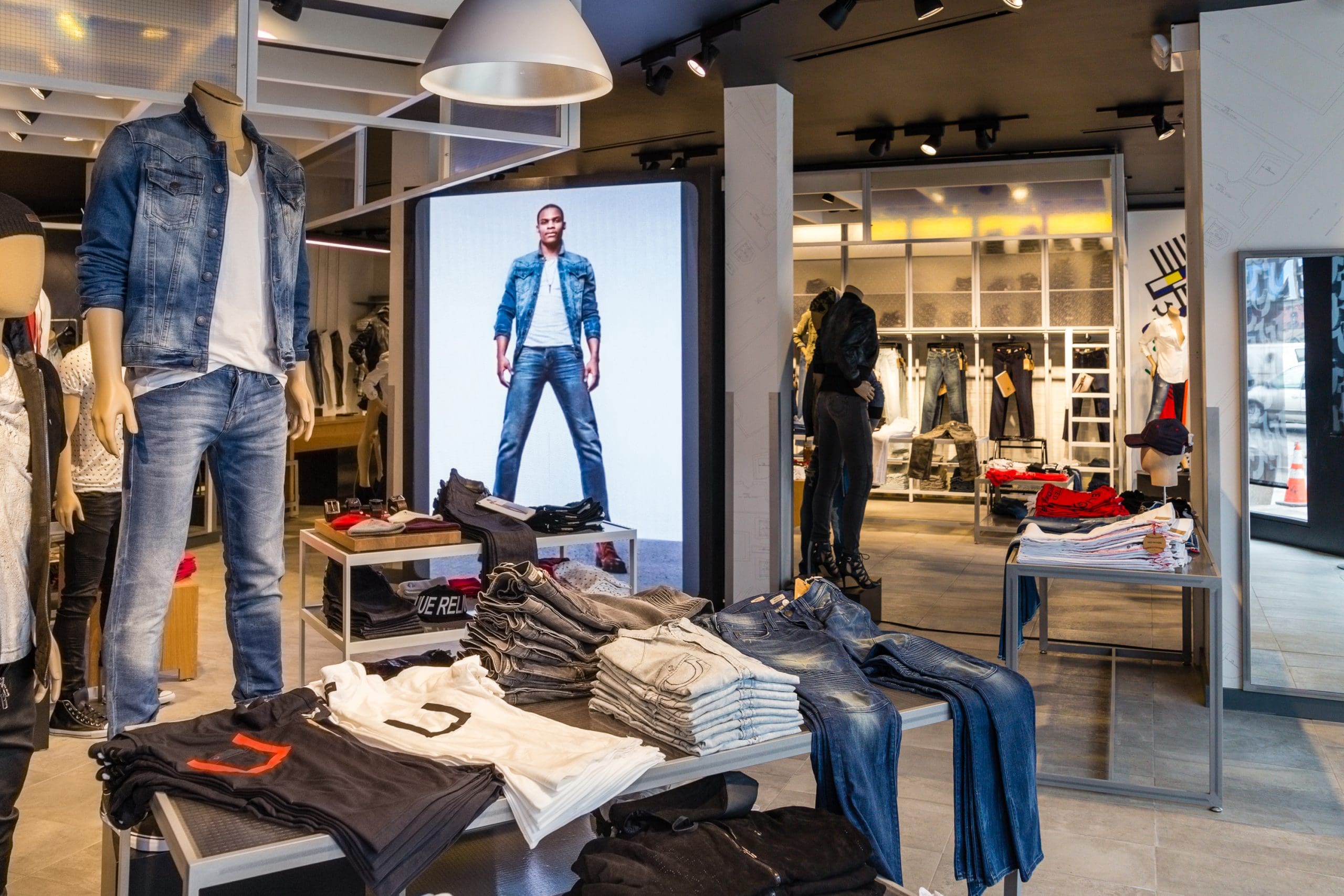
Digital signage has become a common and essential tool in the retail industry, transforming how businesses communicate with customers. These versatile displays capture attention and enhance the shopping experience by providing dynamic and engaging content. As retailers continue to seek innovative ways to stand out, digital signage offers a myriad of benefits that can significantly impact business success.
1. Cost Savings
LED digital signage provides a higher return on investment in the long run, making it a cost-effective solution for retail businesses. While the initial installation costs might be higher than traditional advertising methods, the reduction in recurring fees makes up for it over time. Traditional advertising mediums such as print ads, painted billboards, and posters require constant updates and replacements, which can be costly. In contrast, LED signs can be easily updated with new content, reducing the need for frequent replacements and minimizing ongoing expenses. This financial efficiency makes digital signage attractive for retailers looking to optimize their marketing budgets.
2. Outdoor Durability
One of the most prominent features of LED digital signage is its ability to operate outdoors, opening up new possibilities for eye-catching and durable signage solutions. Outdoor digital signage is designed to withstand a wide range of weather conditions, making it a reliable choice for attracting foot traffic and enhancing brand visibility. Retailers can use outdoor LED signs to display promotions, advertisements, and real-time information, capturing the attention of passersby and driving brand and message awareness. The bright and vibrant displays are easily visible even in direct sunlight, ensuring your message is always seen.
3. Enhances Audience Engagement
Interactive displays are increasingly popular in retail environments, and LED screens are crucial in delivering these experiences. These screens can create an immersive environment that captivates audiences and enriches the overall shopping experience. For example, LED screens can be used to display live fashion shows, product demonstrations, or interactive games, drawing customers into the experience and encouraging them to spend more time in the store. This level of engagement improves customer satisfaction and increases the likelihood of repeat visits and higher sales.
4. Versatile Design Options
Gone are the days of rectangular screens dominating the landscape. Modern LED technology allows for creating displays in a multitude of shapes and sizes, including curved and irregular designs. This flexibility enables retailers to implement creative and original signage solutions that align with their brand aesthetics and store layouts. Custom-shaped LED panels can be used to create stunning visual effects, transforming any space into an eye-catching focal point. Whether it’s a circular display in the center of a showroom or a curved screen wrapping around a column, the possibilities are endless with flexible panel designs.
5. Uninterrupted Visuals
One of the most prominent advantages of LED screens is their ability to provide a seamless image. Unlike traditional displays that have bezels, LED screens can be constructed without visible borders, resulting in a smooth and continuous visual experience. This seamless design is particularly beneficial for large-scale displays and video walls, where uninterrupted visuals are crucial for maximum impact. Retailers can use these seamless displays to showcase high-definition videos, product images, and promotional content, creating a stunning environment that captures and retains customer attention.
6. High Visibility
LED digital signage is known for its brightness and visibility, even in challenging lighting conditions. Exceedingly bright LED panels can catch the viewer’s attention in busy urban areas or sunlit outdoor venues, where the light obscures traditional displays. This high visibility ensures that your content remains clear and impactful regardless of the ambient lighting. For retail businesses, this means that advertisements and promotional messages can be effectively communicated to potential customers at any time, increasing marketing efforts’ reach and effectiveness.
7. Dependable Performance
Reliability is a critical factor in digital signage, and LED screens are renowned for their durability and long lifespan. The solid-state construction of LEDs means fewer components can fail, resulting in lower maintenance costs and reduced downtime. Additionally, LED screens are designed to operate efficiently for lengthy periods, making them an ideal choice for retail environments that require continuous operation. The long-term reliability of LED digital signage ensures that retailers can depend on their displays to deliver consistent performance and high-quality visuals, providing peace of mind and a solid return on investment.
Explore Digital Signage Solutions from PixelFLEX
PixelFLEX LED offers a wide range of award-winning digital signage systems that provide clear and detailed images in virtually any size and shape. Our expert team is dedicated to helping you choose the perfect solution that brings your vision to life. With top-tier technology and craftsmanship, PixelFLEX integrates digital displays and signage to create unique digital experiences for any retail application–indoor, outdoor, or custom designs. Contact us to discover how our innovative digital signage solutions can elevate your retail business.
LED video walls have become ubiquitous in various industries thanks to their ability to deliver dynamic and engaging visuals. From retail storefronts to sports arenas, these versatile displays offer numerous applications that can elevate any environment. Below are 15 use cases and examples to inspire you to incorporate LED video walls into your space.
1. Retail Storefront
Retail stores like Balenciaga in Miami use LED video walls to create stunning storefront displays that captivate shoppers and passersby. These digital installations can showcase promotional content, highlight new collections, and create an immersive shopping experience that drives foot traffic and sales.
2. Corporate Office
In corporate settings, LED video walls can enhance the professional atmosphere and provide a modern touch. In a meeting space inside United Bank, the video wall displays key information, company achievements, and real-time data, fostering a more engaging and informative environment for employees and visitors.
3. Night Club
Night clubs like Baha Mar Bond use LED video walls to create an electrifying atmosphere. These vibrant displays synchronize with music and lighting, enhancing the overall experience and keeping the energy levels high throughout the night.
4. Music Festival
LED video walls are crucial for delivering an immersive experience at music festivals such as the Ultra Music Festival. They display live performances, visual effects, and interactive content, ensuring every attendee has a memorable experience.
5. University Admissions Office
University admissions offices like the Massey Center at Belmont University use LED video walls to impress prospective students and parents. These displays showcase campus life, academic achievements, and essential information, making a solid first impression.
6. Higher Education Performing Arts Center
Higher education performing arts centers, such as Mt. Olive Performing Arts Center, use LED video screens to enhance stage productions. These screens provide dynamic backdrops, display visual effects, and support multimedia performances, elevating the overall production quality.
7. College Football Building
In college football facilities like the MSU Football Building, LED video walls are used to display game highlights, training videos, and motivational content. These installations inspire athletes and create an engaging environment for players and visitors.
8. Professional Sports Arena
At sports arenas like the Bridgestone Arena, LED video walls at entrances create a grand and welcoming experience for fans. These displays show team highlights, advertisements, and important announcements, enhancing the overall event atmosphere.
9. News Studio Floor
In network news studios, LED video walls provide dynamic backgrounds and enhance the visual appeal of broadcasts. They display real-time data, graphics, and video content, helping to deliver engaging and professional news presentations.
10. Broadway Show
Broadway shows like If/Then use LED video walls to create immersive and visually stunning stage designs. These screens offer versatile backdrops and dynamic visual effects that complement the live performances and captivate the audience.
11. Amphitheater
Amphitheaters like the Tuscaloosa Amphitheater incorporate LED video walls to enhance live performances. These screens display close-ups, visual effects, and interactive content, providing an engaging experience for large audiences.
12. City Billboard
In urban environments like 300 Park Avenue in NYC, LED video walls are used as captivating billboards to display advertisements and public messages. These bright and attention-grabbing screens ensure that content is visible even in the bustling city landscape.
13. Real Estate Condo Sales Gallery
Real estate galleries like 77 Charlton – Toll Brothers City Living use LED video walls to showcase properties and lifestyle visuals. These displays give potential buyers an immersive viewing experience, highlighting key features and amenities.
14. Trade Show
At trade shows, LED video walls are essential for creating impactful booths that stand out. Companies like Buzzfeed use these displays to present their products, engage with attendees, and make a memorable impression.
15. Houses of Worship
Houses of worship like Bethel use LED video walls to deliver sermons and engage their congregations. These screens display lyrics, messages, and multimedia content, enriching the worship experience and cultivating a deeper connection with the audience.
Discover PixelFLEX LED Video Walls
PixelFLEX LED offers a large variety of award-winning LED display systems that provide detailed and clear images in any size and shape you desire. As a leading custom LED display manufacturer, we integrate top-tier technology and craftsmanship to create unique digital experiences for any indoor, outdoor, or creative freeform application. Our experts are ready to help you choose a quality solution that brings your creative vision to life. We excel in developing, managing, and delivering every aspect of your LED display project, ensuring world-class installations and service. Contact PixelFLEX LED to discover how LED video walls can elevate your projects and provide impactful visual solutions for your organization.
The world of racing has undergone a revolutionary transformation, driven by advancements in technology and a growing focus on sustainability. At the heart of this transformation lies the driving simulator, a cutting-edge tool that is redefining how professional racers and eSports enthusiasts train, compete, and excel. Let’s dive into the myriad of benefits of driving simulators and explore how they are shaping the future of racing.
Elevating the Racing Experience
PixelFLEX LED’s innovative partnership with Podium One Racing exemplifies the leap forward in driving simulation technology. By combining PixelFLEX’s advanced dvLED solutions with Podium One’s state-of-the-art simulators, the partnership offers an unparalleled racecar driving experience. This collaboration caters to both professional racers and eSports enthusiasts, meeting the surging demand for immersive simulation experiences. But what makes driving simulators so beneficial?
Key Benefits of Driving Simulators
Environmental Sustainability
One of the most significant advantages of driving simulators is their contribution to environmental sustainability. With a growing emphasis on reducing carbon footprints, simulators offer a high-fidelity racing experience without the need for physical travel and the transportation of vehicles and equipment. This reduction in logistics and transportation directly lowers associated emissions, aligning with global efforts to combat climate change.
Cost Efficiency
Traditional racing involves significant expenses related to travel, vehicle maintenance, and fuel. Driving simulators eliminate many of these costs, providing a cost-effective alternative for both training and competition. This financial efficiency makes high-quality training accessible to a broader audience.
Safety
Simulators offer a safe environment for racers to practice and refine their skills. Drivers can push their limits and experiment with new techniques without the risks associated with real-world racing. This focus on safety is particularly beneficial for training new drivers and testing the impact of various scenarios on performance.
Versatility and Customization
Modern driving simulators, like the elevated driving simulator developed by PixelFLEX and Podium One, offer unparalleled versatility and customization. With features like a 180-degree viewing angle, exceptional refresh rates, and a panoramic experience, these simulators can replicate a wide range of racing conditions and environments. Users can tailor their training sessions to specific tracks, weather conditions, and vehicle settings.
Enhanced Training and Skill Development
The precision and realism of driving simulators allow racers to hone their techniques and strategies. As noted by Lando Norris, a current Formula 1 driver, simulators can replicate the nuances of real-world racing, enabling drivers to refine their skills and improve their performance on the track.
From mastering gear shifts and fuel usage to understanding track limits and kerb usage, simulators provide comprehensive training that translates to better performance in actual races.
Immediate Feedback and Data Analysis
Simulators offer immediate feedback and detailed data analysis, allowing drivers to assess their performance in real-time. This instant feedback loop helps racers identify areas for improvement and make quick adjustments, leading to more efficient and effective training sessions.
Accessibility for eSports and Recreational Use
Beyond professional racing, simulators have opened up new opportunities for eSports and recreational users. The popularity of racing games and eSports tournaments has skyrocketed, with simulators providing a realistic and immersive experience for enthusiasts. This accessibility has broadened the appeal of racing, attracting a diverse and passionate community of gamers and aspiring racers.
Promotion of Sustainable Practices
By reducing the need for physical travel and lowering associated emissions, driving simulators promote sustainable practices within the racing industry. This shift towards virtual racing experiences supports broader environmental goals and demonstrates the racing community’s commitment to sustainability.
The Future of Racing is Here
The partnership between PixelFLEX LED and Podium One Racing represents a significant step forward in the evolution of driving simulators. By offering an immersive, eco-friendly alternative to traditional racing practices, these enhanced simulators cater to the growing demand for virtual racing experiences while contributing to global sustainability efforts.
As the racing industry continues to embrace technological advancements and prioritize environmental responsibility, driving simulators will undoubtedly play a crucial role in shaping the future of racing. Whether you’re a professional racer, an eSports enthusiast, or simply passionate about cutting-edge technology, the benefits of driving simulators are clear: they provide a safe, cost-effective, and sustainable way to experience the thrill of racing.
What’s next?
Want to learn more about our elevated simulators? Connect with us.
When modern day cruise passengers board their vacation vessels upon the seas, they expect to be dazzled and inspired by immersive environments and unforgettable experiences. Ship builders that are focused on the hospitality industry recognize these expectations, and our rising to the challenge. Direct View LED (dvLED) technology has become an essential component to creating the engaging experiences that cruise guests expect.
From mesmerizing outdoor cinemas to interactive wayfinding systems, dvLED displays are transforming maritime spaces into dynamic, engaging environments. Leading cruise lines and luxury yacht manufacturers increasingly opt to integrate dvLED solutions into their vessels to captivate and communicate with passengers.
Benefits of dvLED for Cruise Ships and Private Yachts
Improved Passenger Experience
DVLED technology elevates the onboard experience by offering stunning visual displays for entertainment, information, and advertisement. Its capability to operate flawlessly in broad daylight enhances poolside movie viewings and deck parties, while its crisp, clear imagery enriches indoor venues.
Durability and Reliability
The maritime environment poses unique challenges, including saltwater corrosion and fluctuating temperatures. DvLED displays are engineered to withstand these conditions, ensuring long-term reliability and uninterrupted performance—a crucial advantage for ships that spend extended periods at sea. PixelFLEX’s FLEXStorm has become a trusted product that excels in maritime conditions.
Energy Efficiency
DVLED stands out for its low power consumption compared to conventional display technologies. This efficiency translates into reduced operational costs and aligns with the maritime industry’s growing emphasis on sustainability and environmental responsibility.
Customization and Flexibility
The modular nature of dvLED allows for unparalleled customization, enabling ship designers to create unique shapes and sizes that fit specific architectural needs. This flexibility opens new avenues for creative expression and functional design onboard.
Operational Advantages of dvLED in the Maritime Sector
Safety and Navigation
Beyond aesthetics, dvLED plays a vital role in enhancing safety and navigation. High-brightness displays ensure critical information is easily visible, even under direct sunlight, aiding in navigation and emergency communication.
Maintenance and Longevity
DvLED’s longevity and minimal maintenance requirements present a compelling value proposition. With lifespans exceeding traditional displays, DVLED systems reduce the need for frequent replacements, thereby lowering the total cost of ownership.
Sustainability
The energy-saving attributes of dvLED contribute to the maritime industry’s sustainability goals. Lower energy consumption, compared to LCD alternatives, not only reduces operational costs but also minimizes the environmental footprint of cruise ships and yachts.
The Future of LED Displays in Shipbuilding
As we look ahead, the integration of dvLED technology in shipbuilding is poised to expand. Innovations in display technology promise even brighter, more energy-efficient, and flexible solutions, paving the way for smart, connected maritime environments. The potential for dvLED to revolutionize ship design and passenger experience is boundless, promising a future where the seas are not just traversed but truly experienced.
What’s next?
For those looking to delve deeper into the world of dvLED and its applications in the maritime industry, a member of our team would love to help. Connect with us.
The Future of Urban Landscapes
In the age of digital transformation, smart cities are at the forefront of combining technology with urban development to create more efficient, sustainable, and livable environments. A key player in this urban revolution is the integration of outdoor LED displays. These solutions are not just tools for advertising and information dissemination but instrumental in enhancing the aesthetics, functionality, and smart connectivity of urban spaces. This blog delves into how outdoor LED displays are intertwining with smart city technologies to reshape our urban landscapes.
Role in Smart Urban Development
Outdoor LED displays, with their dynamic and interactive capabilities, are increasingly becoming a pivotal element in smart urban planning. They offer a versatile platform for communication that enriches the urban environment with real-time information and interactive feed features.
Growing areas need to be equipped to support the mobile and information-seeking lifestyle that urban cultures now demand. With 70% of the world’s population expected to live in urban areas by 2050, critical information needs to be accessible. Digital technology invigorates participation within these communities.
Forward-thinking city leadership recognizes the value of incorporating outdoor LED solutions into their infrastructures. According to a study by Grand View Research, spending on smart city initiatives is expected to reach USD 463.9 billion by 2027, expanding at a CAGR of 24.7%. LED displays are a significant part of this investment, serving multiple purposes from traffic management to public safety announcements, and environmental monitoring.
A futuristic illustration of a smart city with LED display integrated technology. Image generated through Open AI.
Enhancing Functionality and Utility
The integration of LED displays with Internet of Things (IoT) technology marks a leap in how information is disseminated and used in urban spaces. These displays can now gather and exhibit data from various sources, including traffic sensors, environmental monitors, and public transit systems, offering a centralized platform for city-wide communication.
In Singapore, LED displays connected to IoT devices provide real-time environmental data, such as air quality indices, to the public. Smart LED streetlights in San Diego, equipped with sensors, gather and display data on traffic, parking, and air quality, contributing to better urban management.
A survey by Smart Cities Dive reported that 65% of city planners see digital signage, including LED displays, as a critical component for future smart cities. They recognize the advantages that these solutions provide to citizens as digital data resources.
According to Intel, the IoT market is expected to grow to over 200 billion connected devices by 2030, including sensors and devices integrated with LED displays.
Transforming Cityscapes
Outdoor LED displays have the power to transform cityscapes, both functionally but aesthetically. They offer a modern and dynamic face to city centers, public squares, and streets, enhancing the visual appeal of these spaces while providing valuable information.
Some examples include New York’s Times Square where the LED displays have become a national icon through a mirage of vibrant visual displays. These significantly contribute to the area’s visual identity. Additionally, the integration of artistic content on LED displays in Melbourne’s Federation Square offers a blend of technology and art, enhancing public spaces’ cultural value.
Community Integration
A study by the Urban Land Institute revealed that digital infrastructure, including outdoor LED displays, plays a key role in enhancing the attractiveness and livability of urban areas. Research by Deloitte suggests that smart city solutions, including digital displays, can improve citizens’ satisfaction by 10-30%.
One of the many communal screens that PixelFLEX has installed is located at Nineteen01, an upscale, high-end living rental property located in Southern California. This amenity display used PixelFLEX’s FLEXStorm product to provide a way for residents to stay connected, entertained, and informed.
Since this installation, many other properties have requested creative outdoor dvLED displays to be installed in their community areas and amenity decks to enhance their spaces.
Conclusion
The integration of outdoor LED displays with smart city technologies is not just a trend but a significant stride towards future urban landscapes. By enhancing connectivity, functionality, and aesthetics, these displays are reshaping the way we interact with and experience our cities. As we move forward, the role of LED displays in smart urban development is set to become more integral, promising smarter, more efficient, and more engaging urban environments.
If your organization is interested to learn how LED displays can add value to your community, or if you have a project you would like to discuss, reach out to a member or our team. We are excited to bring your LED vision to life.
 (800) 930-7954


 House of Worship
 Transportation
 Trade shows led display
 retail
 Creative Led Solutions
 Hospitality
 Higher Education
 Corporate LED