Written by Briton Roberts, Sales and Product Engineer at PixelFLEX  with 7+ years at PixelFLEX across Technical Services, Product Management, and Engineering that has managed 1,000+ installations 

Direct-view LED keeps winning ground from projection, but real-world LED display installation problems are where good specs meet the real world of a jobsite. Cabinets that look perfect on paper still have to survive a historic building’s load limits, an interior corner that isn’t quite square, or a control room three floors away. Here are five problems we’ve run into in the field, and what actually solved them. 

Problem 1: Structural Load Constraints in Non-Standard Spaces 

The solution: When a space wasn’t built with LED in mind, whether that’s a historic building, a suspended install, or a non-standard ceiling, get a structural engineer involved before the display design is finalized, not after. 

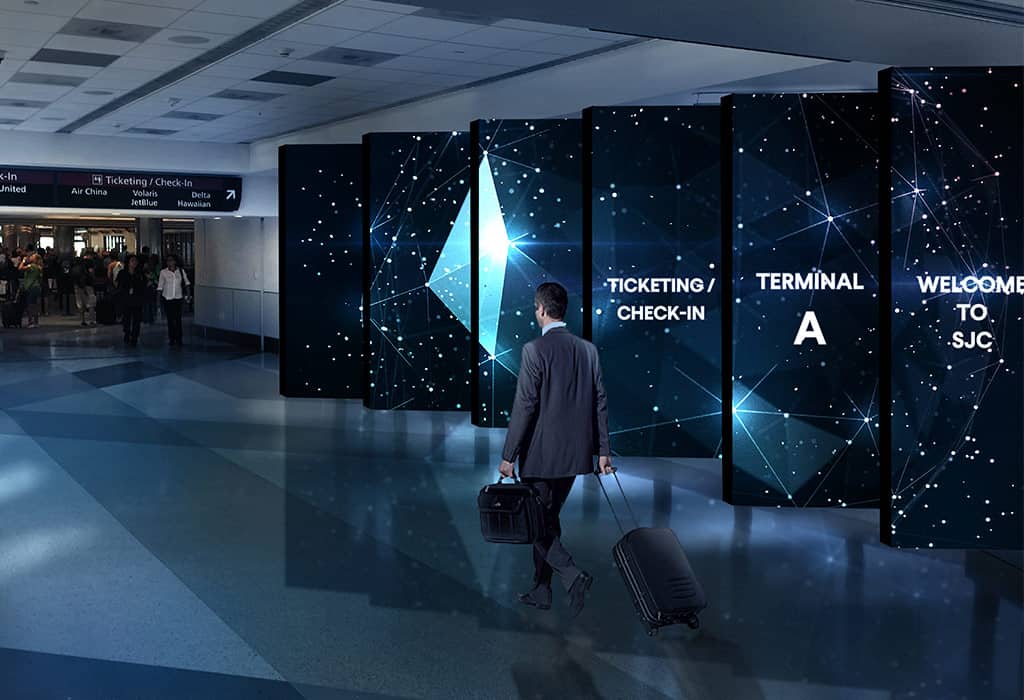
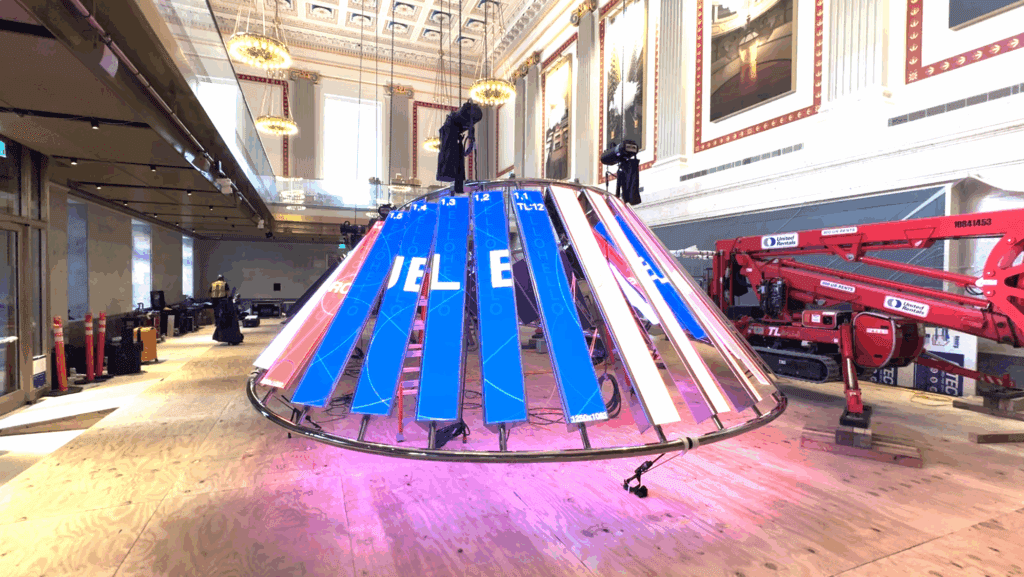
Structural LED Display for Architectural Design

Not every install goes into a steel-frame commercial box. On our Milken Institute project, we partnered with an AV integrator to suspend an interactive LED sculpture 45 feet above a historic lobby, and the building’s preservation status meant strict load and suspension limits from day one. Every connection method and cable route had to be planned around what the structure could actually bear, not just what the design called for. 

The building had recently undergone a careful renovation, and its ornamental floor design couldn’t be marked or damaged during the install. To solve this, the team built a temporary suspended floor directly over the decorative flooring and used specially sized boom lifts to safely reach the 45-foot install height, protecting the finished space while still getting the access the job required. 

Problem 2: Mounting Tolerance on Curved and Corner Installs 

The solution: Curved installs need the mounting substructure engineered and fabricated specifically for the display, not adapted from a standard flat frame after the fact. 

Curved and wrap-around installs look seamless to the client, but getting there means the substructure has to be precise enough that panel-to-panel gaps don’t telegraph through the curve.

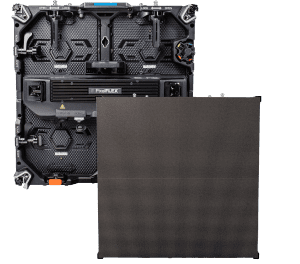
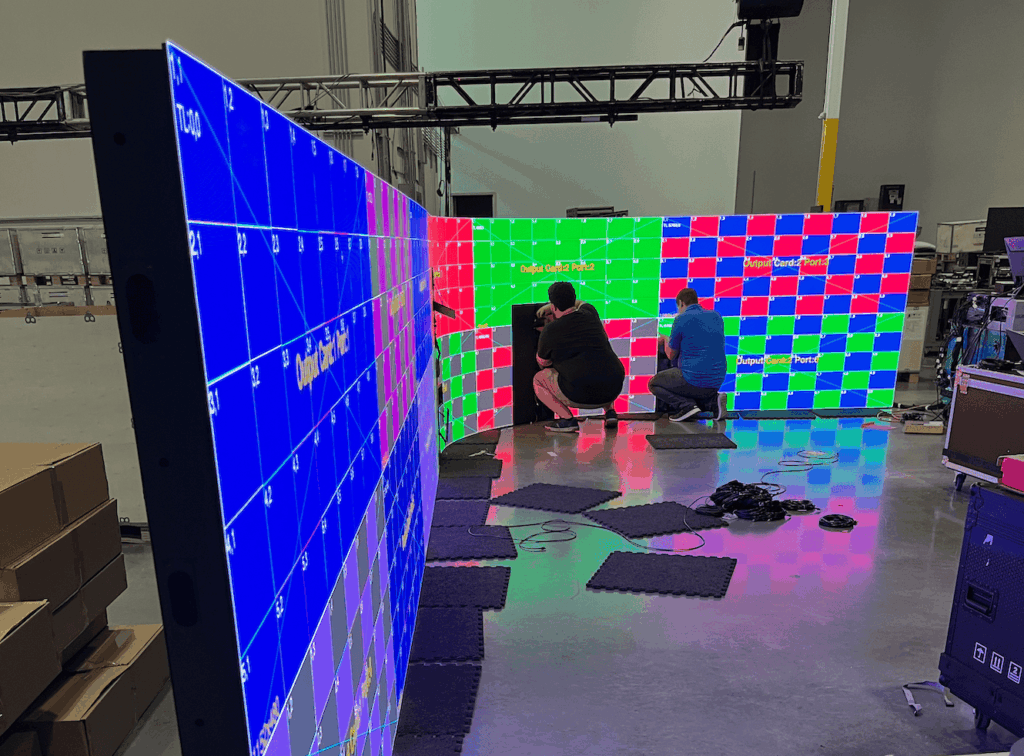
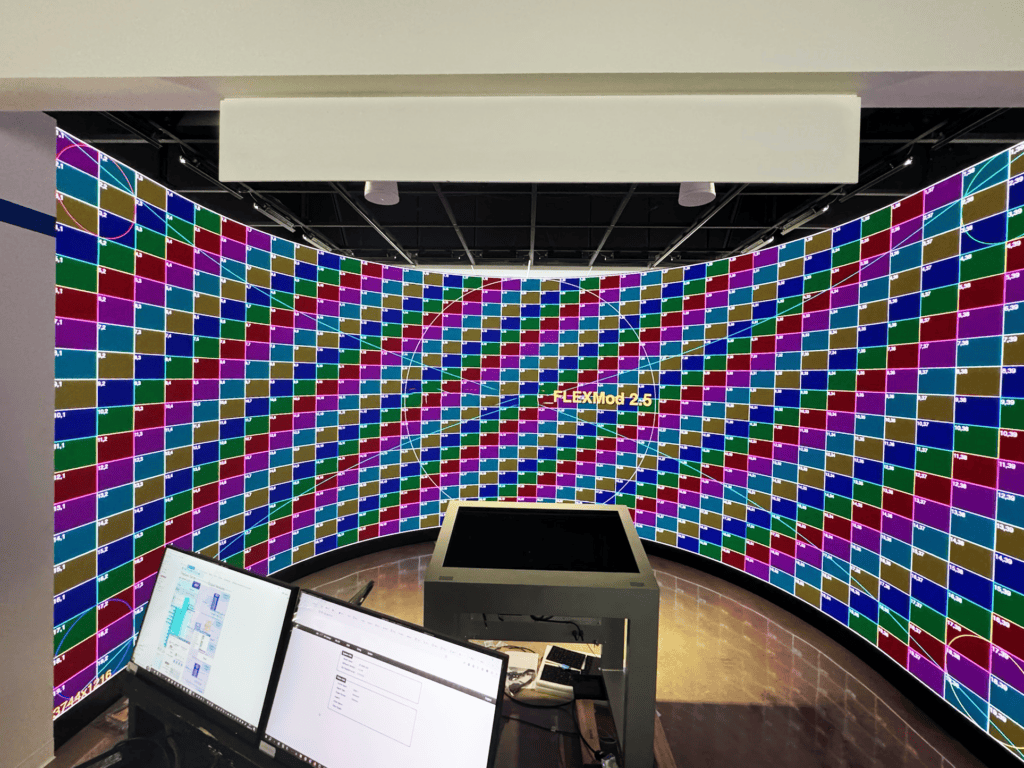
On the NYCFC Stadium Experience Center project, we mounted 490 FLEXMod panels (1.6mm pixel pitch) across two adjacent walls to form one continuous interior corner curve, a job that lives or dies on how tightly the substructure is fabricated and rigged. 

We saw a similar challenge at a smaller scale with Origin Bank’s curved LED halo in their Preston Center lobby. 

LED display technicians build curved LED wall on custom sub-structure

We catch tolerance issues before they become a problem in two ways. Every job includes a signed-off site-survey form specifically to make sure measurements like these don’tget missed. For more complex jobs, like an upcoming Muxwave installation at Dulles International Airport, our project manager goes onsite to work directly with general contractors and architects so minute details get logged correctly from the start. Even with that groundwork, custom conditions still come up, which is where having an experienced install team pays off. If a wall or surface needs it, our team will fabricate a solution onsite, shimming, custom woodworking, whatever it takes to create the right environment for the LED to perform at its best. 

Problem 3: Content Mapping Across Angled or Multi-Surface Displays 

The solution: LED handles angled and multi-surface content better than most people expect, wide diode viewing angles mean nearly every off-axis position stays covered, and purpose-built corner solutions can turn a hard seam into a seamless, even more dynamic display. 

Curved LED wall with content mapping visual

It’s a common assumption that wrapping LED content around a corner or angled surface means sacrificing image quality at wide viewing angles. In practice, most diode designs offer a 160 to 170 degree viewing angle, which means nearly every off-axis position a viewer might stand in is still covered by the diode itself.

There is some parallax effect and color shift near the extreme edges of that range, but it’s mostly negligible compared to the color shift you’d see from an equivalent LCD display. 

Corners are where this gets interesting. Instead of using a mitered edge to force two flat surfaces into a 90-degree corner, our EFP and FLEXStorm VR corner design installs a true-curve module at the seam, creating a seamless transition between both faces of a building’s facade. That same design opens the door to forced-perspective content, where an image can be built to look like it’s physically emerging from the screen toward the viewer, a striking, unique way to make a building facade genuinely exciting to walk past. 

Problem 4: Post-Install Repairs Without Wasting Spare Parts 

The solution: When something goes wrong after an install, adhesive failure, damaged pixels, the instinct is to pull the module and swap in a spare. Often the better fix is repairing it in place, which saves both the spare and the customer’s time. 

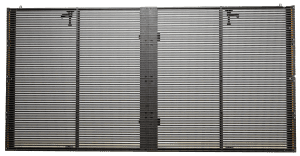
A few months after completing a Muxwave transparent LED installation, the customer reported that adhesive on some of the modules had started to fail. Around the same time, a trim technician working on a separate part of the install accidentally broke a few pixels off during trim work.

That’s two separate problems on one job, and the easy path would have been pulling modules and burning through spare parts on both. 

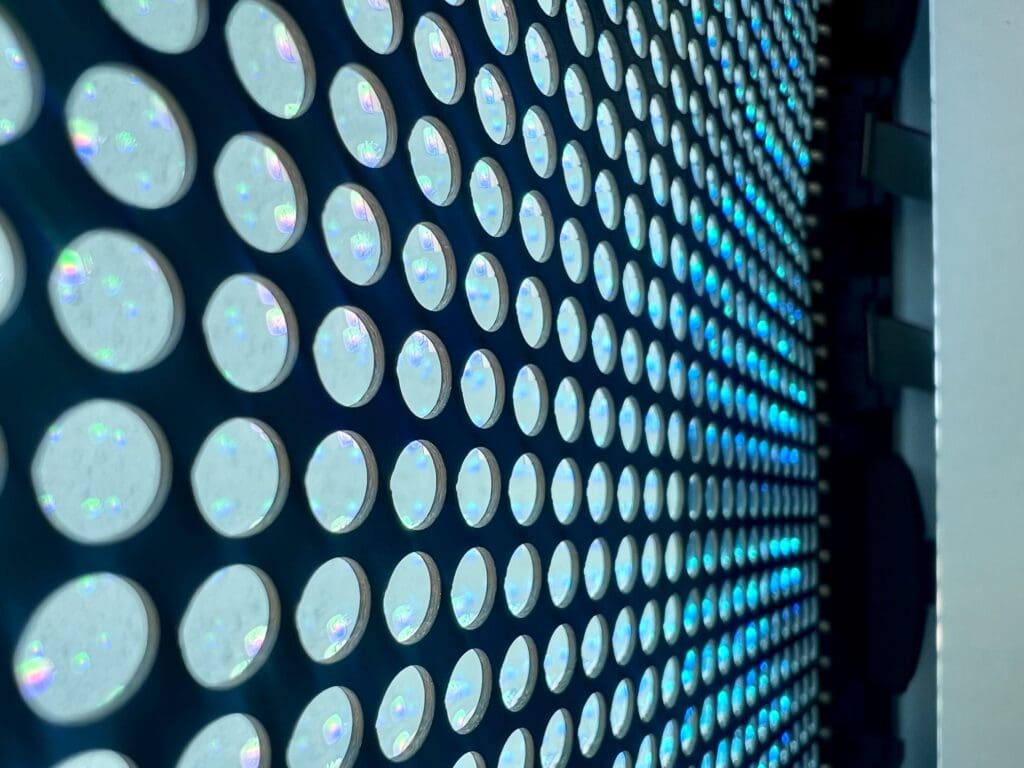
back side of LED mesh mounted to glass

Instead, the team repaired the adhesive using a clear, UV-cured adhesive applied to key portions of the module to rebuild a strong bond, without removing the module from the glass. Removing a module to work on it actually increases the risk of further adhesive failure down the line, so keeping it in place while repairing it is usually the better call. For the broken pixels, the team relied on fine-diode soldering experience to repair them while the module stayed vertically mounted on the glass, which most installation technicians aren’t equipped to do; soldering LED diodes at that scale takes a different skill set than installation work. 

Two issues, solved onsite, with zero spare modules used. A less experienced team would likely have swapped both modules, which costs the customer more in parts, shipping, and downtime than the repair itself. 

Problem 5: Service Issues on an Aging Wall 

The solution: A wall that’s still technically working isn’t the same as a wall that was built to last, warranty coverage, quality control, and spare parts planning up front are what determine whether a display ages gracefully or turns into a wholesale replacement project. 

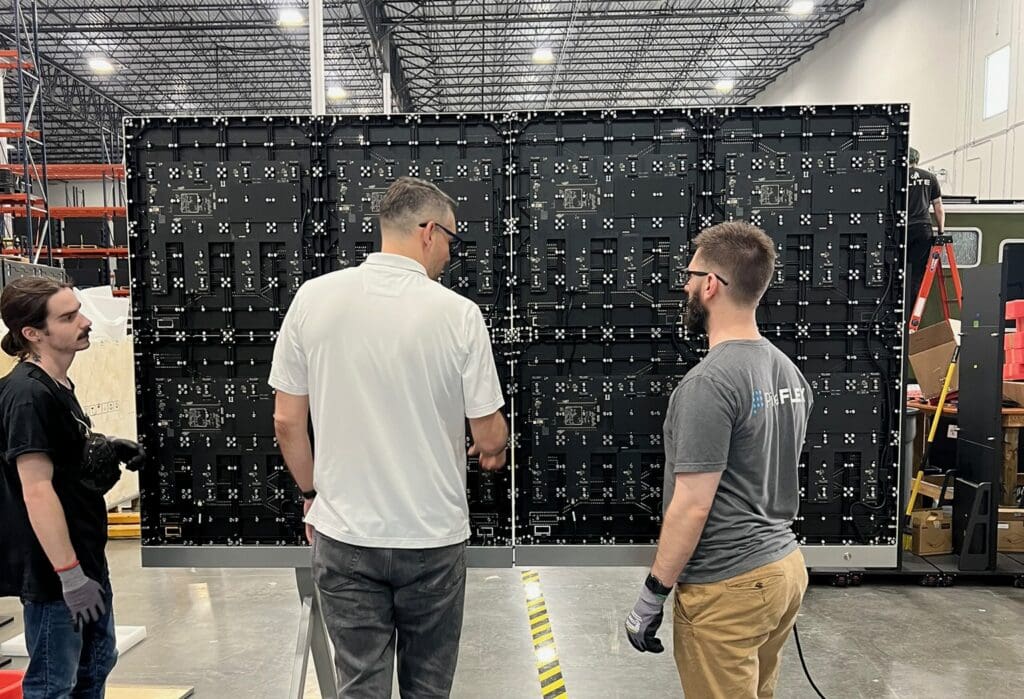
PixelFLEX team looks are LED wall base in warehouse that has dvled display installation problems

We recently began replacing a large LED installation, originally installed only a few years ago by a competitor, for a client. The LED itself is still fundamentally functioning, but the original sale didn’t include spare parts planning.

Now the customer is faced with replacing twelve working displays, not because the technology failed, but because the original provider didn’t account for the long run, they installed it and walked away. 

At PixelFLEX, every installation comes standard with a 3-year warranty, with additional warranty years available. Every unit goes through a 3-party quality control process before it reaches the customer, and our team includes staff with decades of soldering experience, meaning even damaged modules can often be repaired rather than replaced. The lesson for integrators: ask any manufacturer directly what their long-term parts and repair plan looks like before you commit a client to a wall. 

Frequently Asked Questions 

Here are the LED display installation problems integrators ask about most

What is the biggest challenge in installing a direct-view LED display?  

Structural and mounting precision are the most common challenges: the space and substructure need to be engineered around the display’s actual load and tolerance requirements, not adapted after the design is finalized. 

Can direct-view LED be installed in historic or load-restricted buildings?  

Yes, but it requires early coordination with a structural engineer to plan connection methods, cable routing, and weight distribution around the building’s existing constraints. 

Why do curved LED installs need custom mounting structures?  

A curved or wrap-around LED display needs a substructure fabricated to tight tolerances so panel-to-panel gaps don’t show through the curve; standard flat-frame mounting isn’t built for that precision. 

Does LED lose image quality at wide viewing angles or on curved corners?  

Not significantly. Most diodes offer a 160 to 170 degree viewing angle, and purpose-built corner modules can create a seamless curve instead of a visible seam, with only negligible color shift at the extreme edges. 

What should you check before buying an LED display to avoid costly replacements later? 

Confirm the manufacturer’s warranty length, quality control process, and long-term spare-parts and repair plan, displays without that planning often end up needing full replacement years early, even while still technically functioning. 

Can a damaged LED module be repaired without replacing it?  

Often, yes. Issues like adhesive failure or a few broken pixels can frequently be repaired in place using techniques like UV-cured adhesive and fine-diode soldering, which avoids the cost and downtime of swapping in a spare module. 


Want help thinking through the structural or mounting side of your next DVLED install? We would love to connect with your team to talk through your specific space before you finalize the design. Schedule a project consultation today.

Overcoming Common Challenges When Specifying LED Displays in Architecture Projects

In the AV integration world, winning the bid is only the beginning. The real challenge is delivering a flawless installation—on time, within budget, and without the last-minute issues that erode client trust and profit margins. Large-scale LED projects are high-visibility endeavors, both literally and figuratively, and the stakes couldn’t be higher.

Too often, installations are derailed by avoidable mistakes. A miscalculated load requirement, incomplete site survey, or a vendor unable to meet unique project specifications can quickly turn a promising opportunity into a costly problem. These issues rarely go unnoticed. Clients see the delays, feel the stress, and remember who was responsible.

By focusing on proactive planning, clear communication, and early coordination with vendors, AV integrators can prevent most of these setbacks and keep projects running smoothly from bid to completion.

Why Surprises Derail LED Projects

LED video wall installations are rarely plug-and-play. Every environment, whether it’s a corporate lobby, sports arena, or broadcast studio, has unique demands that standard, off-the-shelf solutions can’t always meet. Without early coordination between the integrator and vendor, mismatches in panel size, pixel pitch, or mounting requirements can surface late in the process, leading to redesigns or costly delays.

Site conditions can also create unexpected challenges. The wall might not be level, available power may fall short, or ceiling structures might not support the intended load. Even small oversights can snowball, turning a smooth installation into a stressful, over-budget scramble. These situations not only hurt the project’s profitability but can also damage an integrator’s reputation in a competitive market where word spreads quickly.

Common Pitfalls AV Integrators Face Without a Partnership

When integrators approach a project without the right vendor partnership, the risks multiply. One of the most common pitfalls is overreliance on generic specifications provided by manufacturers who don’t account for the specific conditions of the job site. This often results in materials arriving that are technically “correct” but functionally unworkable in the intended space.

Another frequent issue is underestimating the time needed for custom fabrication or shipping. Without a clear production timeline aligned with your installation schedule, even a minor delay in delivery can push back an entire project, sometimes by weeks. Finally, without a vendor who offers technical guidance, small oversights in power distribution, structural support, or environmental adjustments can lead to system failures or subpar performance once the display goes live.

The Power of Early Vendor Collaboration

The most successful AV integrators share a common practice: they involve their LED vendor at the very beginning of the project. From the moment a bid is being developed, having access to accurate engineering specifications, custom design options, and real-world installation insights helps create proposals that are both competitive and dependable.

Early collaboration makes it easier to identify potential challenges and address them before they affect schedules or budgets. When integrators coordinate with vendors from the start, they can confirm details such as load requirements, power needs, and site-specific conditions well in advance. This proactive approach minimizes last-minute changes, prevents costly delays, and helps build stronger client confidence throughout the project.

What to Look for in an LED Partner

Not all vendors are equipped to support high-complexity LED projects. Choosing the right partner can mean the difference between a smooth installation and an expensive salvage effort.

First, look for a partner with in-house engineering capabilities, not just a sales team. You need access to technical experts who can evaluate your site conditions, design around them, and produce accurate documentation.

Second, prioritize vendors who can manufacture or adapt hardware to your exact specifications. Customization is often essential to achieving a seamless integration, and not every manufacturer has the flexibility to deliver it.

Finally, choose a partner who is committed to post-sale support. Even the best installations require fine-tuning, and having a responsive, knowledgeable support team available after the project is complete ensures that both you and your client remain confident in the solution for years to come.

Building for the Space, Not Against It

One of the most common causes of project delays is trying to fit standard hardware into a space it wasn’t designed for. This can result in awkward framing, visible seams, and poor viewing angles that are difficult to fix once the display is installed.

To avoid these issues, it’s best to plan for equipment that matches the unique specifications of the project. Custom or adaptable LED solutions can ensure that the display fits seamlessly into the environment, maintaining both the functional and aesthetic goals of the design. By aligning technology with the space, integrators can achieve a cleaner installation and deliver a final result that looks intentional and performs reliably.

Managing Complexity Without Losing Control

Even with the right hardware, complex LED projects require a level of coordination that can overwhelm unprepared teams. Multiple trades may be working on the same site. Deadlines can shift. And in many cases, installations must be completed during tight operational windows to avoid disrupting business.

This is where our project management support becomes a game-changer. We work alongside your team to develop clear installation plans, from rigging and mounting strategies to cable routing and final commissioning. If needed, we provide on-site technical assistance to ensure that your team can move quickly and confidently through each stage of the build. The result is a project that stays on track, even when conditions change.

Protecting Margins and Reputation

Every hour spent troubleshooting preventable issues eats into your profits. Worse, it can leave a lasting impression on your client, one that overshadows even the most impressive final product. By working with a vendor that prioritizes accuracy, transparency, and partnership, you protect both your bottom line and your reputation.

At PixelFLEX, our goal is simple: to make your job easier. We eliminate guesswork, reduce risk, and help you deliver installations that clients can’t stop talking about, in the best way possible.

Deliver LED Projects with Confidence

In today’s competitive AV market, your success depends on more than just winning bids. It depends on your ability to execute complex LED projects with precision, predictability, and professionalism. With PixelFLEX LED as your partner, you gain the engineering expertise, custom manufacturing capabilities, and hands-on support to move from bid to installation without the costly surprises that derail projects.

Explore our LED display solutions | See our case studies | Start a partnership with PixelFLEX LED


Overcoming Common Challenges When Specifying LED Displays in Architecture Projects

Architectural design has always been about vision — shaping spaces that connect with people through form, function, and feeling. In recent years, LED displays have become a powerful part of that vision. From a massive exterior video wall that turns a building into a nighttime landmark to a subtle, dynamic lobby installation that changes the mood of a space, LED technology has expanded what’s possible in the built environment.

But as exciting as these possibilities are, translating them from concept to completion can be far from simple. The creative ideas that seem limitless in the design phase can meet roadblocks in engineering, compliance, or installation. Technical missteps, late-stage compromises, and communication gaps can dilute the original design intent — or worse, prevent the project from moving forward at all.

At PixelFLEX LED, we believe that technology should serve the vision, not limit it. The most compelling architectural LED integrations happen when creative ambition is paired with technical precision from day one. Here’s how that happens, and how the most common hurdles can be transformed into opportunities for stronger design.

Bringing Technology Into the Design Conversation Early

One of the most common issues we see is LED being treated as an add-on rather than an integrated design element. When the decision to include a display happens late in the process, the architectural space has often already been planned without accounting for its structural, electrical, and environmental needs.

This can lead to rushed compromises — reducing display size to fit into an existing wall opening, accepting visible seams where none were intended, or choosing a mounting method that disrupts the design language.

The solution is simple but often overlooked: bring the LED conversation into the earliest stages of design. When architects, engineers, and LED specialists collaborate from the start, the result is not just better integration, it’s a display that feels native to the architecture. In one corporate project, early planning allowed the design team to recess a large-scale display into a custom feature wall, hiding all technical components while preserving the clean sightlines of the lobby. Without that early involvement, the display would have required a bulky surface mount that would have disrupted the space’s minimal aesthetic.

Translating Technical Complexity Into Design Confidence

Architects are experts in spatial vision, not in calculating the power distribution for thousands of LED modules or planning ventilation for high-performance electronics. Yet these technical factors — along with structural loads, weatherproofing, and heat management — can make or break an installation.

Too often, the technical information architects receive from vendors is either incomplete or overly dense. It becomes another barrier in the design process, making it difficult to confidently specify a product or finalize details with contractors.

The answer isn’t to expect architects to become LED engineers, it’s to translate complex requirements into clear, actionable design information. For a recent public plaza project, our team provided fully scaled engineering diagrams that overlaid display specifications onto the architect’s own CAD drawings. This made it easy for the design team to see exactly how the display would interact with surrounding materials, where structural reinforcement would be needed, and how to plan routing for power and data — without ever feeling like they were reading a technical manual.

Bridging the Gap Between Design and Implementation

Even when the design and technical specs are perfect on paper, the project can falter if communication breaks down between the architect, LED manufacturer, AV integrator, and contractors. Misunderstandings about mounting details, ventilation clearances, or even the intended resolution of the display can lead to costly delays.

We’ve seen this avoided through deliberate project management and cross-discipline coordination. In one museum installation, our role went beyond supplying the LED system — we attended construction meetings, reviewed mock-ups, and worked directly with millworkers to ensure the display enclosure matched the surrounding finishes exactly. By acting as the bridge between creative and technical teams, we kept the installation on schedule and preserved every detail of the original design intent.

Balancing Creativity With Code Compliance

Pushing creative boundaries is part of every great architectural project — but it can’t come at the cost of safety, accessibility, or regulatory compliance. For LED displays, these considerations extend beyond the obvious. They can include weight limits for suspended elements, ADA standards for viewing angles and placement, and even ventilation requirements tied to electrical code.

Addressing these factors late in the process can lead to last-minute redesigns that strip away the essence of the original concept. Addressing them from the start makes them part of the creative solution.

On a large-scale exterior installation, our team worked with both the architect and the local permitting office before fabrication began. By presenting detailed mounting specs, wind-load calculations, and heat dissipation data, we secured approvals without altering the display’s footprint or brightness. The result met both the creative vision and the most rigorous safety standards — a win for design and compliance alike.

Customizing LED to the Architecture, Not the Other Way Around

One of the fastest ways to lose the integrity of a design is to force it to fit a pre-made display format. Standard LED panels may work for conventional installations, but architectural projects often demand more — unique dimensions, curved surfaces, or unusual mounting conditions.

Rather than reshaping the design to accommodate the technology, the technology can be reshaped to serve the design. In a performing arts center project, we created a series of custom LED panels to match the curve and taper of an existing architectural feature. Each panel was built to exact dimensions, allowing the display to read as part of the building rather than an added object.

Custom solutions like this not only preserve the design language but also open creative possibilities that would be impossible with off-the-shelf components.

From Challenge to Opportunity

The truth is, every architectural LED project will have challenges. The question is whether they are discovered early enough to be solved without compromise. With the right partnership, each challenge becomes an opportunity to refine and strengthen the design.

By engaging LED specialists early, translating technical requirements into clear design actions, coordinating across disciplines, addressing compliance proactively, and customizing the technology to the architecture, architects can design with confidence — knowing their vision will survive the journey from concept to completion.

Designing With Confidence

At PixelFLEX LED, our role is to remove barriers between an architect’s idea and its execution. We provide not just the technology, but the collaboration, communication, and customization that ensure LED integration serves the architecture at every stage.

From the first sketch to the final inspection, we’re committed to making LED a medium that enhances your design without limiting it. With every project, our goal is the same: to see your creative intent not just survive the process, but emerge stronger because of it.

Explore our LED display solutions | See our case studies | Start a partnership with PixelFLEX LED

×
Need Help?
X

Ready to Talk?

Our team is ready to connect.