 (800) 930-7954

 House of Worship
 Transportation
 Trade shows led display
 retail
 Creative Led Solutions
 Hospitality
 Higher Education
 Corporate LED











How Tariffs Are Changing the dvLED Supplier Conversation
(...and Why U.S.-Based Support Now Matters More Than Ever)
Tariffs have been part of the Pro AV conversation for a while now. But in 2026, the conversation has shifted. It is no longer about whether tariffs might affect pricing. It is about what supply chain volatility is actually costing integrators on live projects, and how the choice of supplier either insulates you from that risk or exposes you to it.
If you source dvLED products from overseas suppliers, you are absorbing uncertainty at every stage of the order: pricing that can shift between quote and delivery, lead times that stretch without warning, support that operates on a different schedule than your jobsite, and documentation that may not reflect what actually arrives on the truck.
None of that is hypothetical. It is the pattern that integrators who have been through it describe in plain terms: the project that almost missed a grand opening because product was held in customs, the display that arrived with a configuration discrepancy that took three days to resolve across time zones, the warranty claim that went quiet for six weeks.
Understanding why these things happen, and how to avoid them, starts with understanding what domestic sourcing actually changes.
What Tariff Volatility Looks Like on a Real Project
The headline impact of tariffs is price. But price is not always the most damaging part for integrators.
The more disruptive issue is uncertainty. When tariff rates shift between the time a project is quoted and the time product is ordered, the margin calculation changes. When a supplier’s overseas warehouse is navigating new compliance requirements, lead times stretch. When product is flagged at the border, installation schedules slip. None of these are the integrator’s fault, but the integrator is the one explaining the delay to the client.
For design consultants, the risk is different but equally real. A spec built around a product that is suddenly subject to significant import cost increases can put a project in a difficult position at bid time. A substitution made under budget pressure mid-project is rarely a clean swap. It creates documentation gaps, calibration questions, and liability exposure that the original spec was designed to prevent.
The cost of supply chain disruption is rarely just the product. It is the timeline, the client relationship, and the margin on the next project too.
What U.S.-Based Operations Actually Change
When a dvLED supplier designs, engineers, and builds product at a U.S. facility and operates their support infrastructure domestically, the tariff conversation changes fundamentally.
Custom-built product is engineered and assembled specifically for each project at a domestic facility. That means the supply chain exposure that comes with overseas fulfillment, shifting import costs between order and delivery, unpredictable lead times, and customs delays, is removed from the equation. Lead times are defined by the build, not by port clearance or international freight schedules. And when something needs to be addressed before or after delivery, the conversation happens during your workday with a team that understands your project context.
That is not a minor operational convenience. For an integrator with a hard deadline and a client who expects a seamless installation, it is the difference between a project that runs on schedule and one that does not.
Building product domestically also changes what pre-delivery QC looks like. When product is engineered and assembled at a U.S. facility, it is possible to run meaningful quality checks before it leaves: component inspection, third-party testing, a full pre-build that verifies wiring, power, and content playback. Overseas suppliers can claim QC processes too, but verification and accountability are harder to maintain across that distance when the build happens on the other side of the world.
The Real Cost of Time-Zone Friction
Support quality is one of the most underweighted factors in supplier selection, and it is one of the places where overseas sourcing creates the most friction on live projects.
When a display arrives on site and something needs to be addressed fast, a support team that is eight to twelve hours ahead of your time zone is effectively unavailable during your working day. An email sent at 9 a.m. on a Tuesday gets a response the following morning. If commissioning is happening that afternoon, that gap matters.
U.S.-based support means your questions get answered in real time, by people who can look up your order, pull your documentation, and help you solve the problem before the client notices there is one.
This is not a small thing on a project where reputation is on the line. The integrator who can make a problem disappear before the client sees it is the integrator the client calls back for the next project.
Every hour of time-zone friction on a live project is an hour the integrator is carrying a problem alone. That should not be the default.
How to Ask the Right Questions Before You Commit
Evaluating a supplier’s supply chain exposure is not complicated, but it requires asking direct questions. Here is what to cover:
- Where is product built and shipped from? A supplier operating from a U.S. facility versus one fulfilling orders from overseas is a meaningful operational distinction, not a marketing detail.
- What is the current lead time, and what drives variability? A supplier who cannot give you a clear answer is telling you something.
- Where is your support team located, and what are your response time commitments? Named locations and defined SLAs are what accountability looks like.
- How does your pricing hold between quote and order? If tariff exposure is real, how is that communicated and managed?
- What happens if a unit needs to be replaced post-delivery? Domestic logistics for warranty and replacement is a very different experience from overseas return-and-replace cycles.
A supplier who can answer all of these questions clearly and specifically is a supplier whose supply chain you can rely on. Vague answers to direct questions are a pattern that will repeat itself when the pressure is on.
What This Means for Your Business Right Now
The dvLED market is not going to get less complicated in the near term. Tariff policy continues to shift, supply chains are still adjusting, and the integrators who are building their businesses around suppliers with U.S.-based operations are the ones who are insulating themselves from the disruption everyone else is absorbing.
For design consultants, this is also a specification conversation. Specifying a supplier with U.S.-based operations, documented QC, and domestic support is a form of risk management. It protects the spec through construction, reduces the likelihood of a substitution under budget pressure, and gives the project team a reliable point of contact throughout the installation and beyond.
The choice of supplier has always mattered. In a market defined by supply chain volatility, it matters more than it ever has.
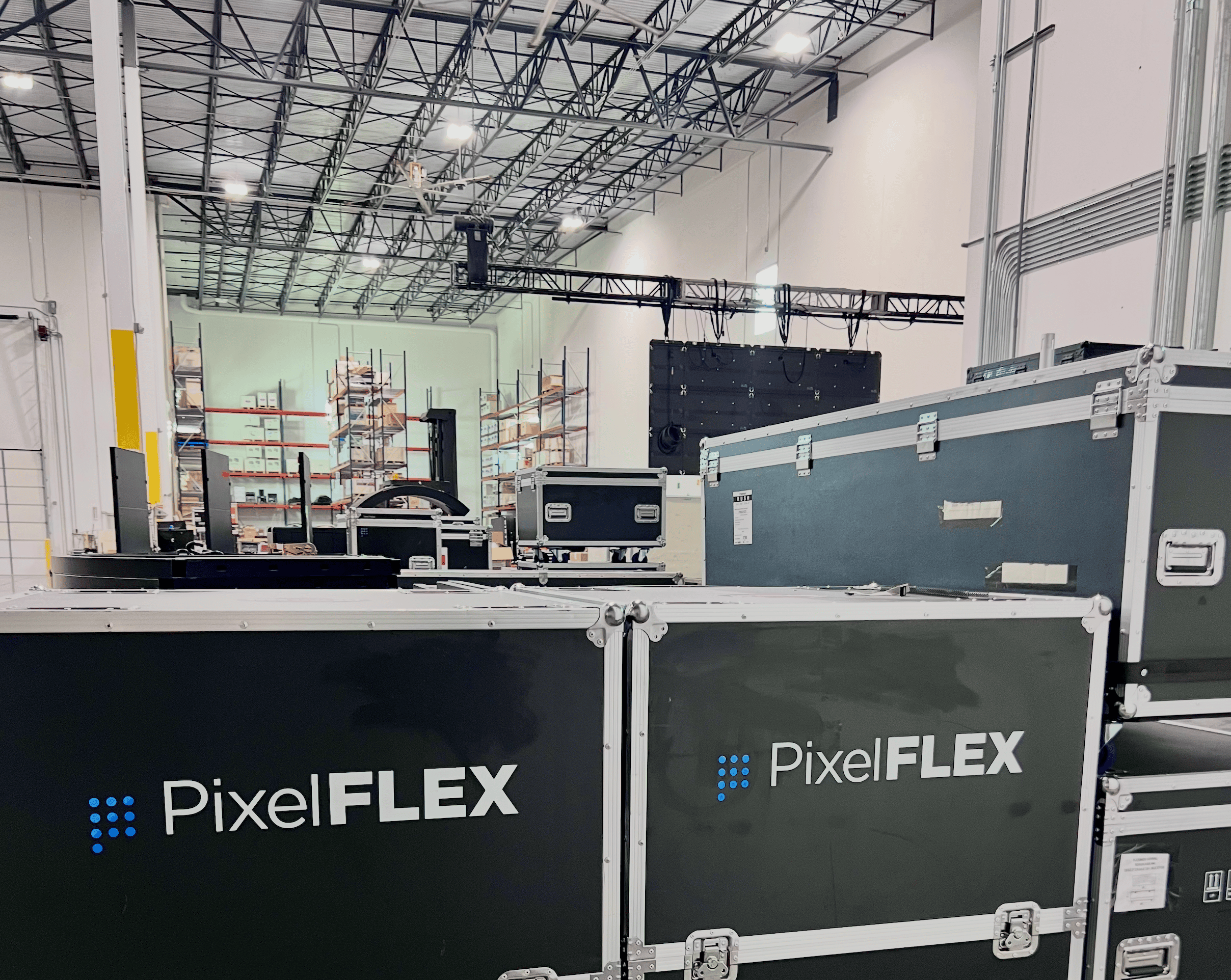
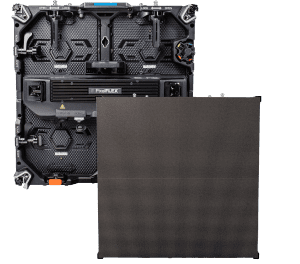
PixelFLEX operates from a facility just outside of Nashville, Tennessee.
PixelFLEX designs and builds custom dvLED solutions from our facility just outside of Nashville, Tennessee. Every display is engineered for the project, QC-tested before it ships, and supported by a U.S.-based team available during your workday. Select pixel pitches of our most popular product, FLEXThin, are also available for fast-turn projects. Our support team stays involved from the bid stage through post-install. If you want to see what that looks like as a formal partnership, the PixelFLEX Partner Program is where that conversation starts.