 (800) 930-7954

 House of Worship
 Transportation
 Trade shows led display
 retail
 Creative Led Solutions
 Hospitality
 Higher Education
 Corporate LED














Five Jobsite Surprises dvLED Installers Face
(...and How to Prevent Them)
LED installs do not go wrong because integrators are careless. They go wrong because the information needed to prevent a problem often sits with the supplier, and that supplier is not always in the conversation early enough to share it.
Experienced integrators know this pattern. The structural issue that did not show up in the drawings. The unit that arrived looking fine but behaved unexpectedly on power-up. The commissioning session that ran three hours over because documentation was missing. None of these are catastrophic individually. Combined, they erode margin, delay timelines, and create conversations with clients that no one wants to have.
The good news is that most common dvLED jobsite surprises are preventable. Not by working harder on site, but by engaging the right supplier earlier in the process.
Here are five of the most common, and what the prevention actually looks like.
Surprise #1: Structural and Power Issues Discovered On-Site
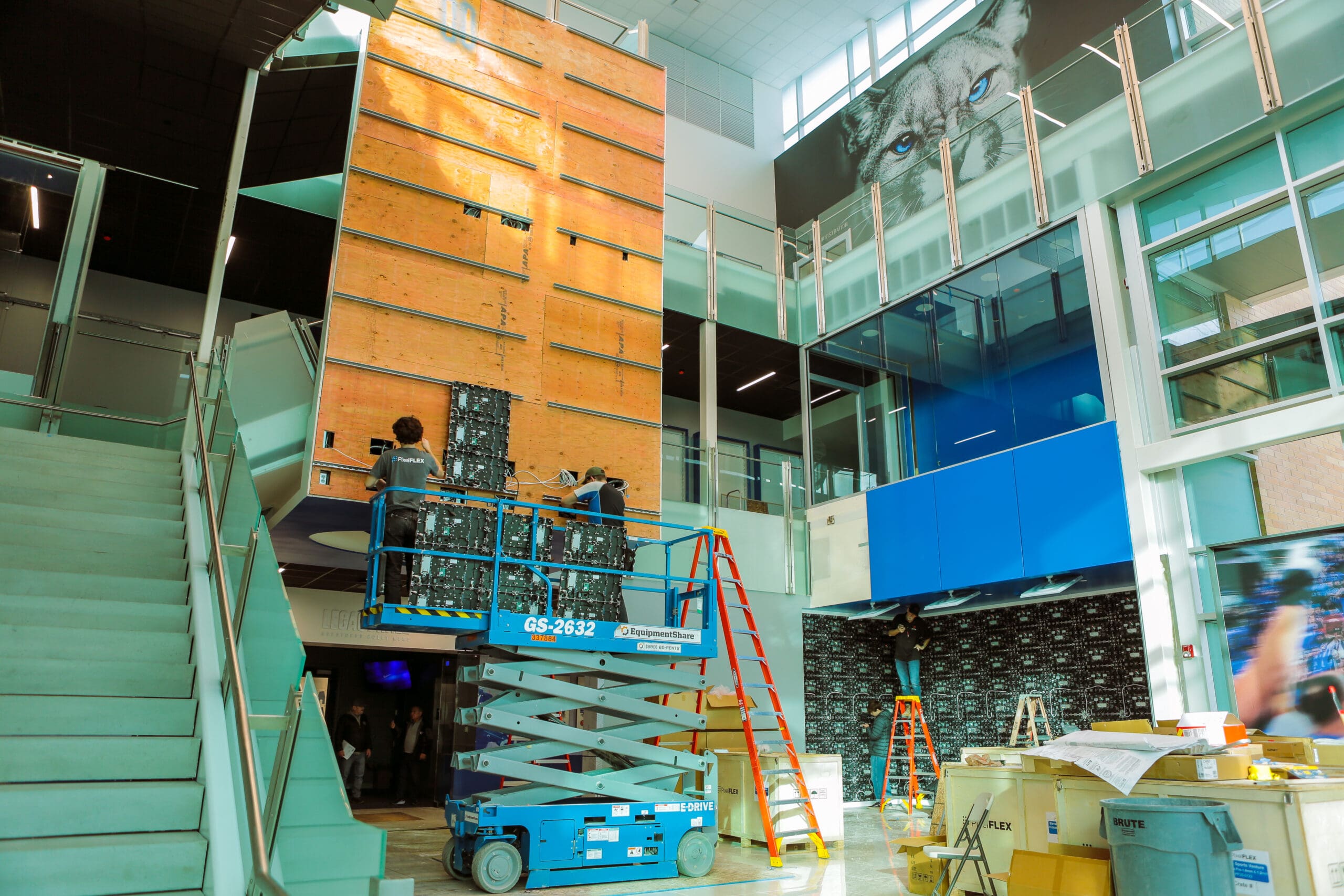
This one tends to surface at the worst possible moment: the crew is on site, the wall is framed, and something about the mounting surface, load capacity, or power infrastructure does not match what the drawings showed.
Structural surprises on LED installs come in a few varieties. The wall behind the finished surface is not what was specified. The ceiling load rating does not support the rigging plan. The power runs are not where the electrical drawings said they would be, or the circuit capacity is insufficient for the display configuration.
The prevention starts well before anyone sets foot on site. Pre-bid elevation drawings and custom shop drawings give the installation team a clear picture of how the display fits into the actual space, not just a theoretical one. When a supplier provides these documents as part of their standard engagement, structural issues get surfaced during planning, not during installation. That is the difference between a design revision and a jobsite problem.
Power requirements should also be spelled out clearly at the specification stage. A supplier who understands the install environment and asks the right questions early can flag potential power issues before they become the electrician’s emergency on install day.
Surprise #2: Units That Do Not Perform as Expected Out of the Box
A display that arrives looking fine and then fails to perform as specified during commissioning is one of the most frustrating jobsite experiences in this industry. It is also one of the most avoidable.
The root cause is almost always a QC process that was not rigorous enough before the product left the facility. A unit that has been through component inspection, third-party acceptance testing, and a full pre-build that verifies wiring, power, and content playback is a unit that should not surprise you on site. A unit that has only been visually inspected or run through a basic power-on test is a unit that might.
The question to ask any supplier is not whether they test their products. It is what the test actually involves and at what point in the build process it happens. Three separate checkpoints across the build, each catching different failure modes, is a meaningful commitment. A general quality assurance claim is not.
A display that performs on day one is not luck. It is the result of a QC process that was thorough enough to catch problems before the product left the building.
Surprise #3: Documentation Gaps That Slow Commissioning
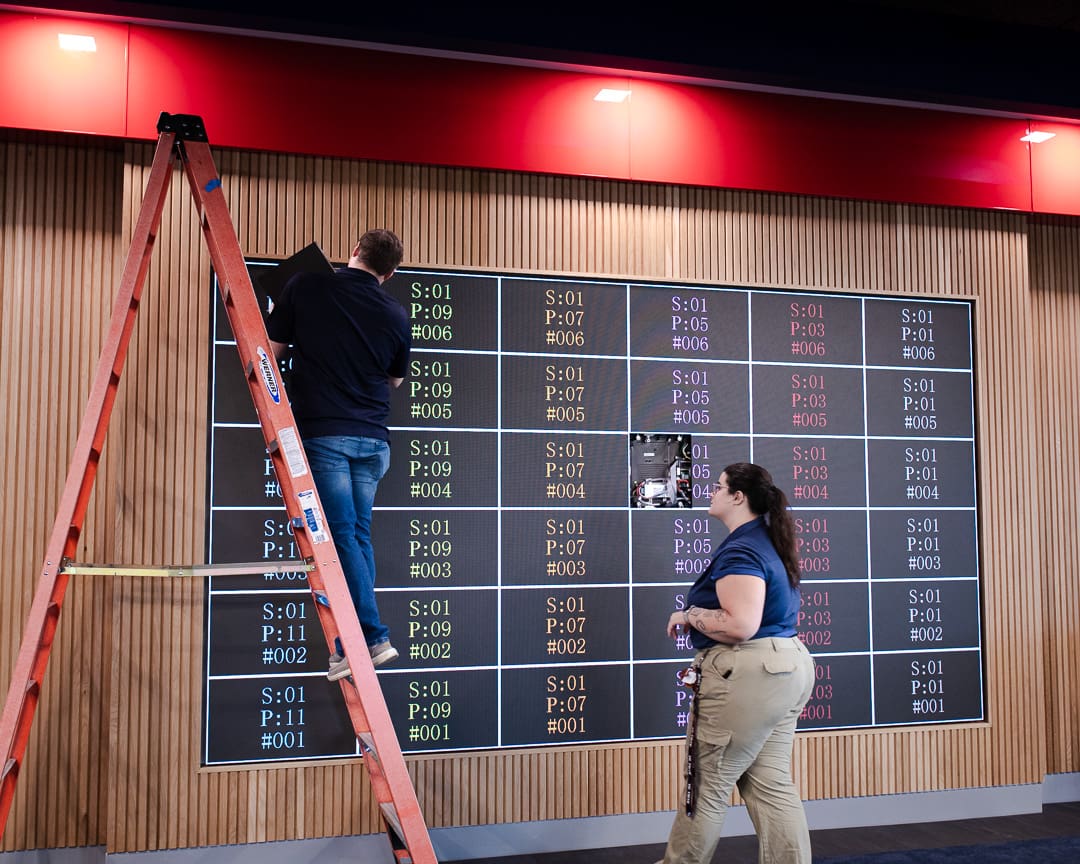
Missing or incomplete documentation is one of the most common sources of delay on LED installs, and one of the least visible until you are on site and need something you do not have.
The forms this takes vary. Wiring diagrams that do not match the actual configuration delivered. Signal routing documentation that was not included in the shipment. Installation guides that reference a previous product version. Cabinet layout drawings that do not reflect the custom configuration ordered.
Each of these adds time. A commissioning session that should take two hours stretches to five. A question that should have a clear answer requires a call to the supplier, who may or may not be reachable at that moment. The project that was supposed to hand off on Tuesday slips to Thursday.
Complete documentation should be part of every order, not something that has to be requested after the fact. That means elevation drawings, shop drawings, signal routing documentation, wiring diagrams specific to the configuration delivered, and installation guides that match what arrived on the truck. When documentation is treated as a standard deliverable rather than an afterthought, commissioning runs on schedule.
Surprise #4: Signal and Content Compatibility Issues
Signal routing and content compatibility problems have a way of surfacing during commissioning, which is about the worst time to discover them. The display is up, the client may be present, and a configuration issue that should have been resolved in pre-production is now being worked through in real time.
The most common scenarios involve mismatches between the content management system and the display controller, signal chain gaps that were not mapped during pre-production, or resolution and refresh rate configurations that were not confirmed against the content being played.
These issues are preventable with early engagement. A supplier who asks about the content environment, the signal chain, and the CMS at the specification stage can flag compatibility considerations before they become commissioning problems. A supplier who only finds out about these details when product arrives on site is a supplier who is discovering the problem at the same time you are.
Rack-ready and signal-ready configurations eliminate a large portion of these issues by design. When the display system arrives pre-configured for the signal environment it is going into, there are fewer variables to resolve on site.
Signal and content compatibility issues discovered during commissioning are almost always pre-production problems. The conversation that prevents them happens at the bid stage.
Surprise #5: Post-Install Support That Goes Dark
This one does not show up on installation day. It shows up three months later when something needs attention and the supplier who was responsive during the sale is suddenly difficult to reach.
For integrators, the post-install period is where the client relationship is either strengthened or damaged. A display that performs reliably and has a support team behind it gives the integrator confidence and gives the client a reason to call back. A display that requires chasing an overseas support queue for warranty service puts the integrator in an uncomfortable position with a client who does not care whose fault the problem is.
Post-install support quality is almost impossible to evaluate from a spec sheet. The questions to ask before committing to a supplier are direct:
- What does the warranty actually cover?
- Who handles replacement logistics?
- Where is the support team located, and what are their response time commitments?
A supplier who answers these questions clearly and specifically before the sale is a supplier whose post-install support is likely to hold up. Vague answers are a pattern worth taking seriously.
The Common Thread
Look at these five surprises and a pattern emerges. Most of them are not installation problems. They are pre-installation problems that surface during installation because the right conversation did not happen early enough.
Structural issues are caught in drawings reviews. DOA units are caught in thorough QC. Documentation gaps are closed before the shipment leaves. Signal compatibility is confirmed during pre-production. Post-install support is evaluated before the order is placed.
The supplier who prevents these problems is the one who is engaged early, asks the right questions, and treats the bid stage as the beginning of the project rather than the beginning of the sale. That is what a real partnership looks like in practice.
PixelFLEX engages at the bid stage because that is where most jobsite problems are actually solved.
Pre-bid drawings, triple QC, complete documentation, and U.S.-based support that picks up the phone are built into every project we run. If you want to talk through what that looks like on your next install, the conversation starts below.
Talk to PixelFLEX at the bid stage: PixelFLEX Partner Program is where that conversation starts.