(800) 930-7954
Communicate worship schedules and sermon messages while engaging your congregation with visual technology.
View More
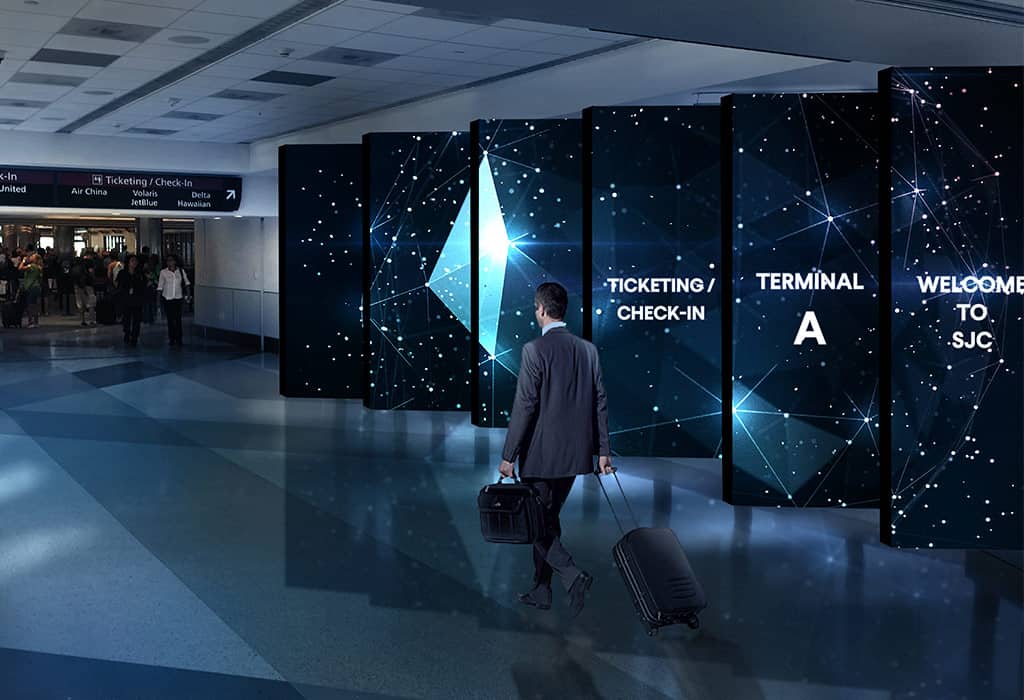
LED displays in transportation settings, such as airports, train stations, and bus terminals, serve as dynamic platforms for real-time information, advertising, and wayfinding, enhancing passenger experience with clear, up-to-date travel details and announcements.
View More
Differentiate yourself from the competition by incorporating a digital experience in your booth with our trade show LED displays.
View More
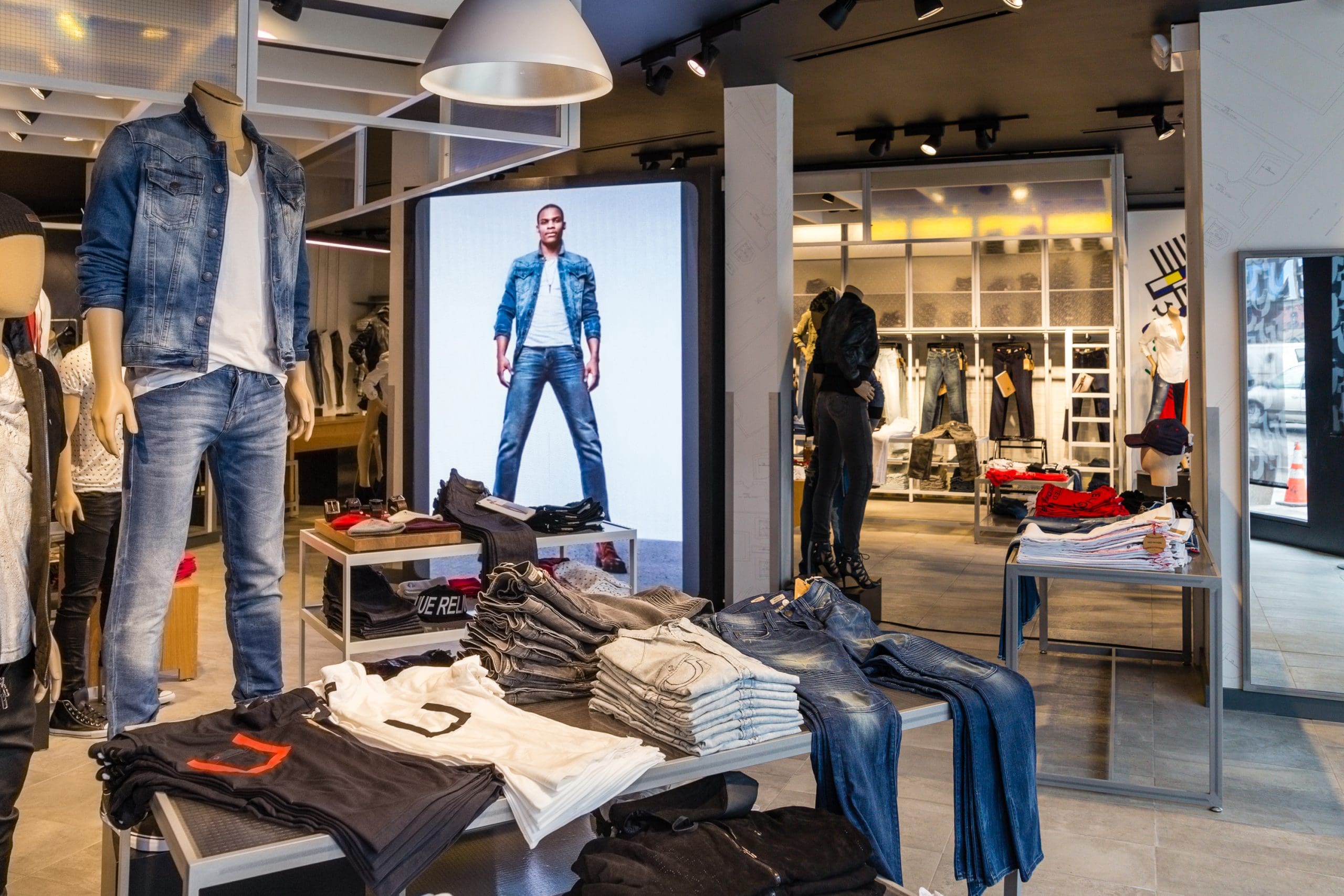
Communicate your brand’s message, stand out from the competition and engage your target market with LED digital signage.
View More
We offer creative solutions at cost-effective rates. You will be able to deliver your sermons more effectively and engage your congregation through one-of-a-kind lyric video walls and house of worship LED displays.
View More
Enhance ambiance, display interactive directories and wayfinding displays, and promote amenities and events to elevate the guest experience.
View More
Incorporate digital displays to enhance your students’ learning experience and market to prospective students and donors.
View More
Transform your corporate spaces with PixelFLEX LED video displays. Enhance communication, elevate branding, and create dynamic environments.
View MoreCustom LED display manufacturing starts with the specific space and specs it’s being built for, size, shape, pixel pitch, and viewing environment, then moves through engineering, fabrication, quality testing, and on-site installation. Unlike an off-the-shelf display, every stage is built around the exact space it’s going into rather than a standard product line.
Written by Steven Gingis, Project Manager at PixelFLEX with 8 years in the commercial AV industry, including 5 years in AV project management; background in aviation, with a Bachelor of Applied Science in Aviation from RMIT
The process starts with the specifics: room dimensions, viewing distance, ambient lighting, content plans, and any physical constraints on the space. A curved corner, a historic building, or a non-standard ceiling all get identified here, before any engineering work begins.
Power and data infrastructure gets planned at this stage too, where the power and data feeds are coming from, and exactly where they need to land at the display.
This determines whether wiring can stay hidden inside the structure or has to run through a surface-mounted route. This can be easy to overlook until it’s too late to change without added cost.
This is where a flat spec sheet turns into an actual plan for the space. For a curved or wrapped display, the substructure gets engineered and fabricated specifically for that install rather than adapted from a standard flat frame. PixelFLEX designed exactly this kind of custom substructure for NYCFC developed its Stadium Experience Center, where the client needed a seamless 90-degree curve radius that had to be planned around the architecture itself. Anything unusual about the space, load restrictions, historic preservation limits, tight access, gets engineered around at this stage, not discovered mid-install.
Free-standing or sculptural displays add another layer to installation plans: where the power and data whip exits the base, and how it’s routed from there. Left uncoordinated with the architect, that cord can end up running exposed across a finished floor instead of hidden inside the structure. This can be an expensive problem to fix once the floor is installed. Planning cable paths with the architect at this stage is what keeps that whip hidden and the finished look clean.
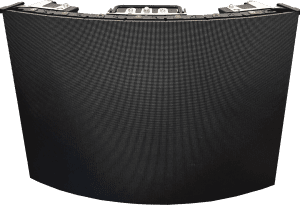
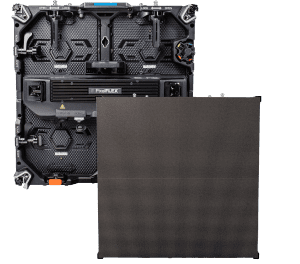
Panels and modules get built to the project’s exact specs, size, shape, and pixel pitch, rather than pulled from generic inventory. Curved and multi-surface designs need panel-to-panel tolerances tight enough that the seams don’t show through the curve once everything is mounted.
Every unit goes through quality testing before it ships. PixelFLEX runs every display through a 3-part quality control process, checking for consistent color, brightness, and function across every panel before it leaves for the job site.
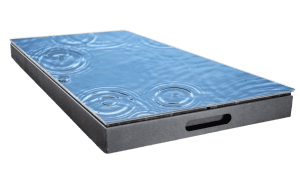
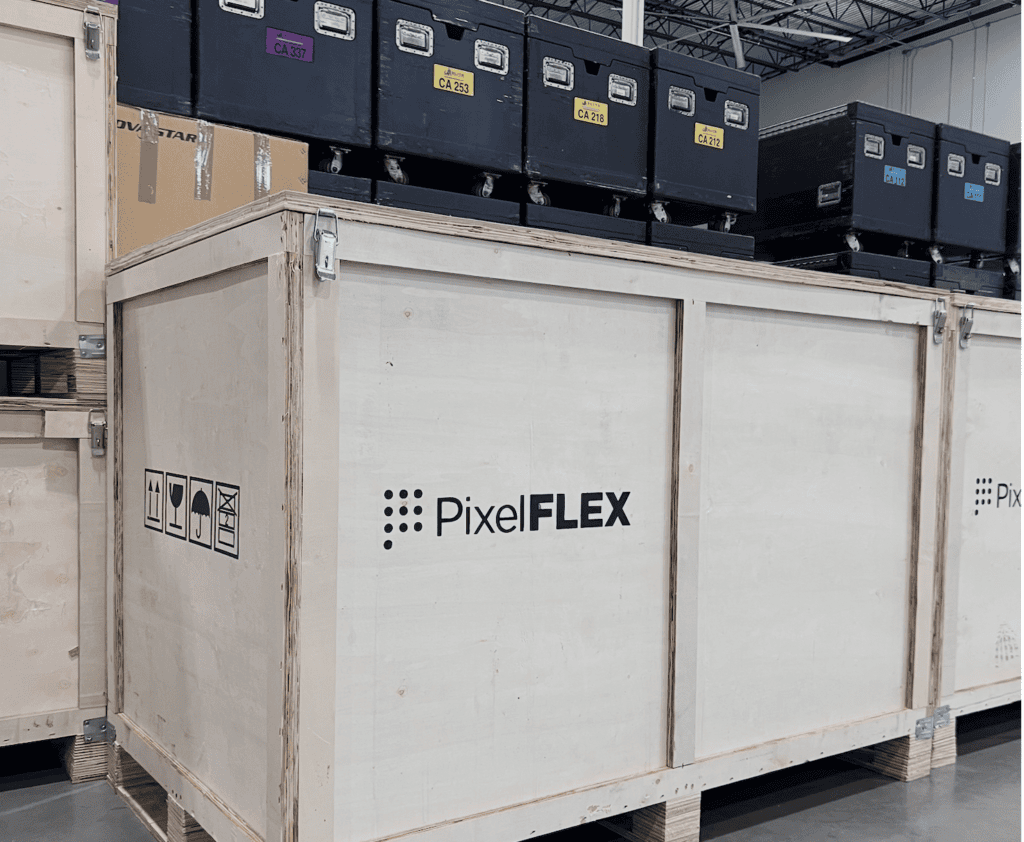
Custom panels get packaged to protect the exact shape and finish they were built with.
Curved or non-standard modules often need custom packaging rather than a standard shipping crate, since a generic box isn’t built to protect a shape that doesn’t match a flat panel.
Installation follows the site survey and structural plan from earlier stages. Once panels are mounted, they get calibrated and color-matched on-site so the display looks even from one panel to the next, the same step every corporate or custom install goes through before the crew leaves.
The installation phase itself is covered in more depth in Working with an LED Display Supplier, During Installation.
How long does custom LED display manufacturing take?
Timelines vary based on size, shape, and complexity.
A full breakdown of typical lead times is covered in What’s the typical lead time for a custom LED video wall build?.
What makes custom LED manufacturing different from a standard display?
A standard display comes from existing inventory built to common sizes and shapes. A custom display is engineered and fabricated around a specific space, size, shape, or pixel pitch that a standard product line doesn’t cover.
Does every custom LED project need a structural engineer?
Not every project, but any install into a non-standard space, a curved or suspended design, a historic building, or an unusual mounting surface, should have a structural engineer involved during the engineering and design stage.
Can curved or oddly shaped LED displays be manufactured to match any space?
In most cases, yes, but it takes a substructure engineered specifically for that shape rather than an adapted flat-panel design. The more unusual the space, the earlier that engineering work needs to start.
Every custom build starts with the specifics of your space. Connect with our team to talk through what’s possible for yours.