Written by Briton Roberts, Sales and Product Engineer at PixelFLEX  with 7+ years at PixelFLEX across Technical Services, Product Management, and Engineering that has managed 1,000+ installations 

Direct-view LED keeps winning ground from projection, but real-world LED display installation problems are where good specs meet the real world of a jobsite. Cabinets that look perfect on paper still have to survive a historic building’s load limits, an interior corner that isn’t quite square, or a control room three floors away. Here are five problems we’ve run into in the field, and what actually solved them. 

Problem 1: Structural Load Constraints in Non-Standard Spaces 

The solution: When a space wasn’t built with LED in mind, whether that’s a historic building, a suspended install, or a non-standard ceiling, get a structural engineer involved before the display design is finalized, not after. 

Structural LED Display for Architectural Design

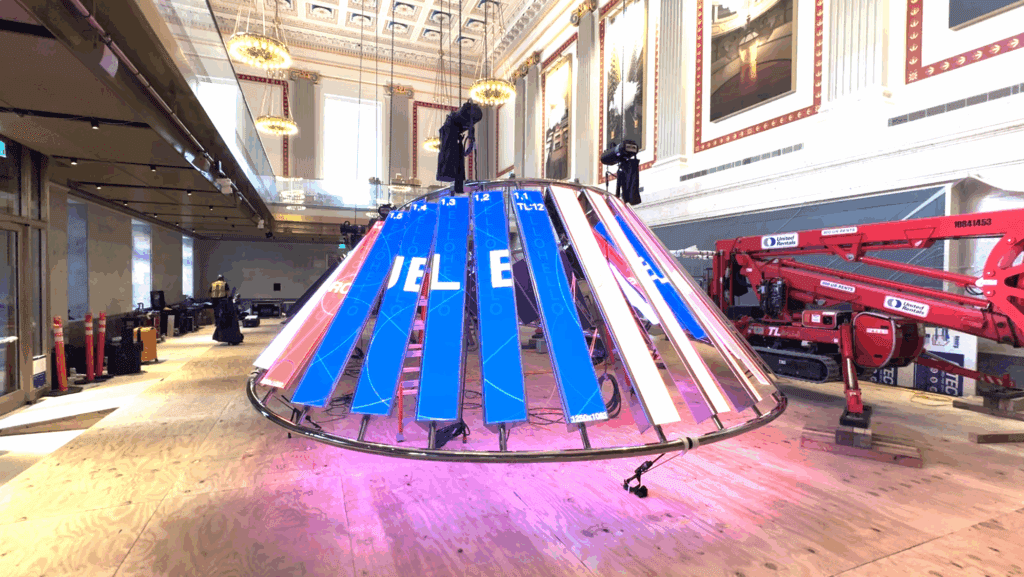
Not every install goes into a steel-frame commercial box. On our Milken Institute project, we partnered with an AV integrator to suspend an interactive LED sculpture 45 feet above a historic lobby, and the building’s preservation status meant strict load and suspension limits from day one. Every connection method and cable route had to be planned around what the structure could actually bear, not just what the design called for. 

The building had recently undergone a careful renovation, and its ornamental floor design couldn’t be marked or damaged during the install. To solve this, the team built a temporary suspended floor directly over the decorative flooring and used specially sized boom lifts to safely reach the 45-foot install height, protecting the finished space while still getting the access the job required. 

Problem 2: Mounting Tolerance on Curved and Corner Installs 

The solution: Curved installs need the mounting substructure engineered and fabricated specifically for the display, not adapted from a standard flat frame after the fact. 

Curved and wrap-around installs look seamless to the client, but getting there means the substructure has to be precise enough that panel-to-panel gaps don’t telegraph through the curve.

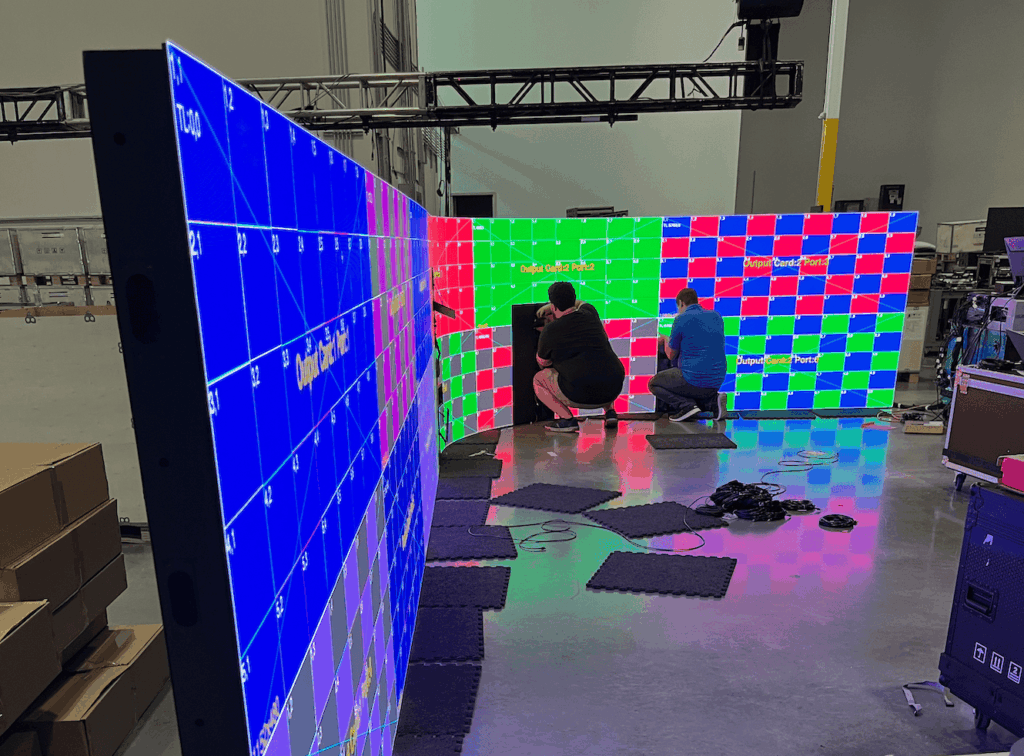
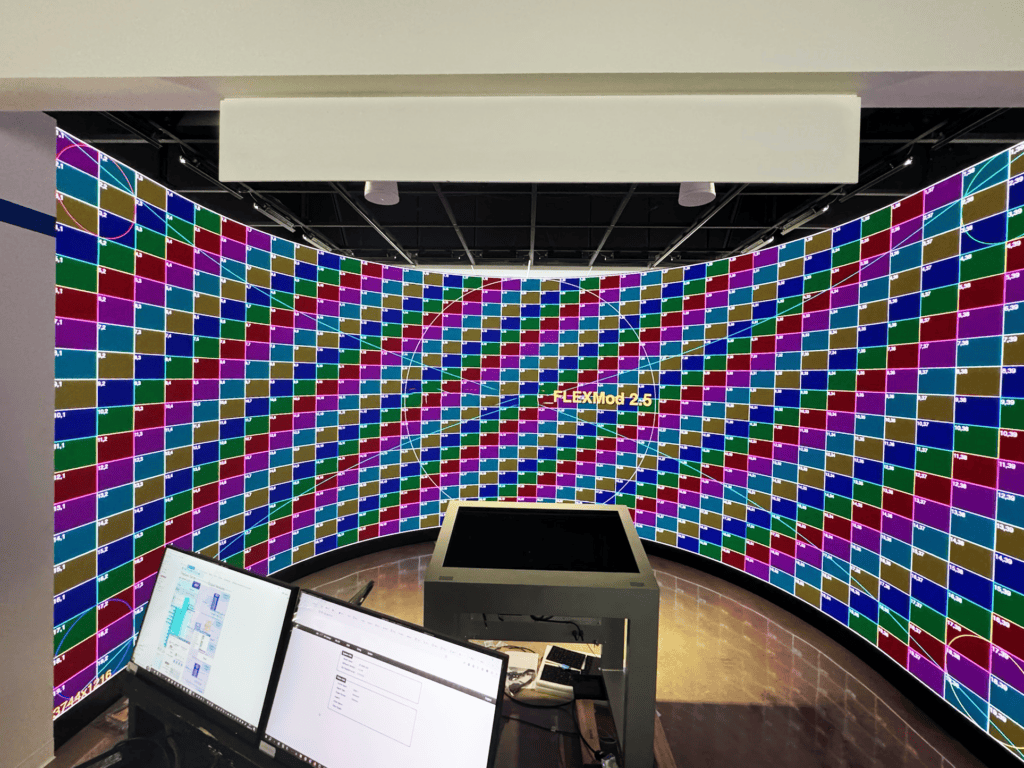
On the NYCFC Stadium Experience Center project, we mounted 490 FLEXMod panels (1.6mm pixel pitch) across two adjacent walls to form one continuous interior corner curve, a job that lives or dies on how tightly the substructure is fabricated and rigged. 

We saw a similar challenge at a smaller scale with Origin Bank’s curved LED halo in their Preston Center lobby. 

LED display technicians build curved LED wall on custom sub-structure

We catch tolerance issues before they become a problem in two ways. Every job includes a signed-off site-survey form specifically to make sure measurements like these don’tget missed. For more complex jobs, like an upcoming Muxwave installation at Dulles International Airport, our project manager goes onsite to work directly with general contractors and architects so minute details get logged correctly from the start. Even with that groundwork, custom conditions still come up, which is where having an experienced install team pays off. If a wall or surface needs it, our team will fabricate a solution onsite, shimming, custom woodworking, whatever it takes to create the right environment for the LED to perform at its best. 

Problem 3: Content Mapping Across Angled or Multi-Surface Displays 

The solution: LED handles angled and multi-surface content better than most people expect, wide diode viewing angles mean nearly every off-axis position stays covered, and purpose-built corner solutions can turn a hard seam into a seamless, even more dynamic display. 

Curved LED wall with content mapping visual

It’s a common assumption that wrapping LED content around a corner or angled surface means sacrificing image quality at wide viewing angles. In practice, most diode designs offer a 160 to 170 degree viewing angle, which means nearly every off-axis position a viewer might stand in is still covered by the diode itself.

There is some parallax effect and color shift near the extreme edges of that range, but it’s mostly negligible compared to the color shift you’d see from an equivalent LCD display. 

Corners are where this gets interesting. Instead of using a mitered edge to force two flat surfaces into a 90-degree corner, our EFP and FLEXStorm VR corner design installs a true-curve module at the seam, creating a seamless transition between both faces of a building’s facade. That same design opens the door to forced-perspective content, where an image can be built to look like it’s physically emerging from the screen toward the viewer, a striking, unique way to make a building facade genuinely exciting to walk past. 

Problem 4: Post-Install Repairs Without Wasting Spare Parts 

The solution: When something goes wrong after an install, adhesive failure, damaged pixels, the instinct is to pull the module and swap in a spare. Often the better fix is repairing it in place, which saves both the spare and the customer’s time. 

A few months after completing a Muxwave transparent LED installation, the customer reported that adhesive on some of the modules had started to fail. Around the same time, a trim technician working on a separate part of the install accidentally broke a few pixels off during trim work.

That’s two separate problems on one job, and the easy path would have been pulling modules and burning through spare parts on both. 

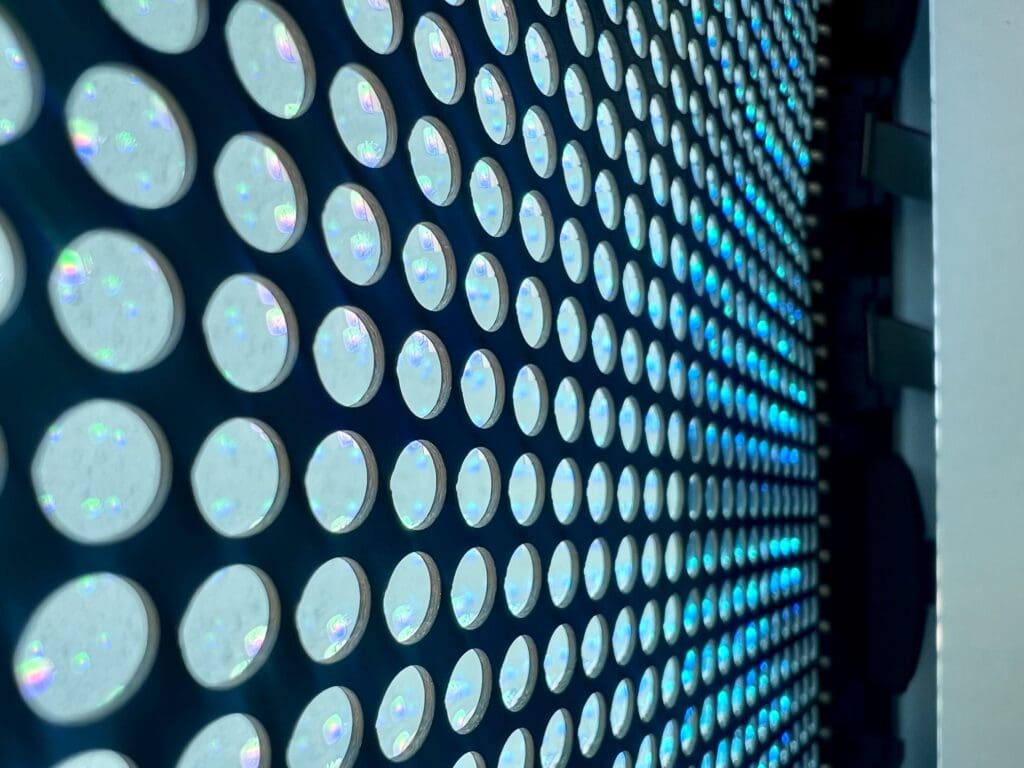
back side of LED mesh mounted to glass

Instead, the team repaired the adhesive using a clear, UV-cured adhesive applied to key portions of the module to rebuild a strong bond, without removing the module from the glass. Removing a module to work on it actually increases the risk of further adhesive failure down the line, so keeping it in place while repairing it is usually the better call. For the broken pixels, the team relied on fine-diode soldering experience to repair them while the module stayed vertically mounted on the glass, which most installation technicians aren’t equipped to do; soldering LED diodes at that scale takes a different skill set than installation work. 

Two issues, solved onsite, with zero spare modules used. A less experienced team would likely have swapped both modules, which costs the customer more in parts, shipping, and downtime than the repair itself. 

Problem 5: Service Issues on an Aging Wall 

The solution: A wall that’s still technically working isn’t the same as a wall that was built to last, warranty coverage, quality control, and spare parts planning up front are what determine whether a display ages gracefully or turns into a wholesale replacement project. 

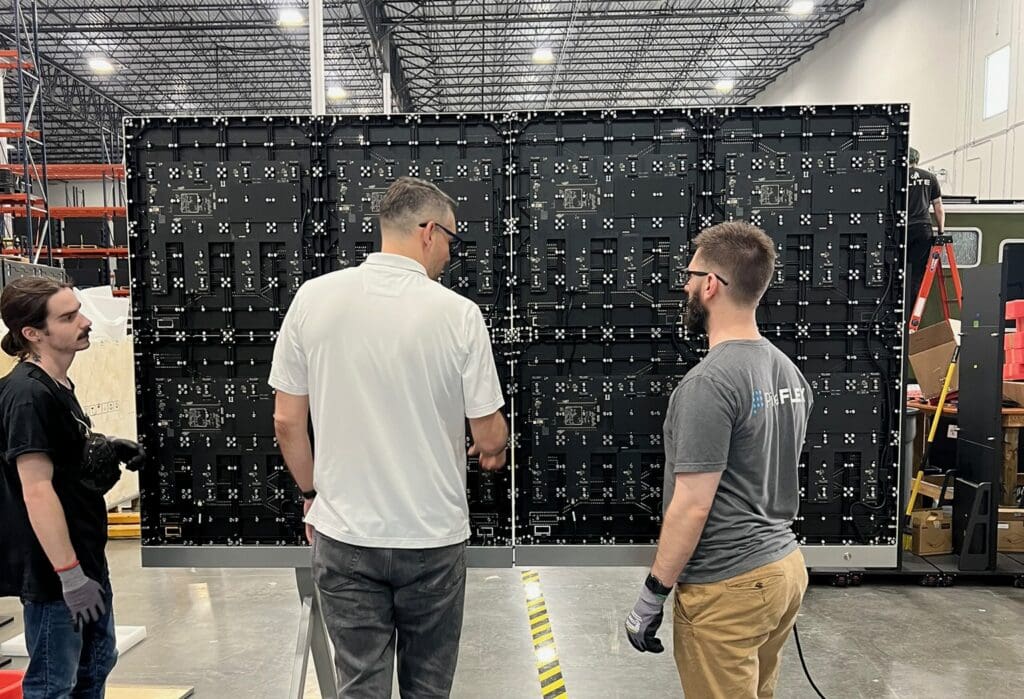
PixelFLEX team looks are LED wall base in warehouse that has dvled display installation problems

We recently began replacing a large LED installation, originally installed only a few years ago by a competitor, for a client. The LED itself is still fundamentally functioning, but the original sale didn’t include spare parts planning.

Now the customer is faced with replacing twelve working displays, not because the technology failed, but because the original provider didn’t account for the long run, they installed it and walked away. 

At PixelFLEX, every installation comes standard with a 3-year warranty, with additional warranty years available. Every unit goes through a 3-party quality control process before it reaches the customer, and our team includes staff with decades of soldering experience, meaning even damaged modules can often be repaired rather than replaced. The lesson for integrators: ask any manufacturer directly what their long-term parts and repair plan looks like before you commit a client to a wall. 

Frequently Asked Questions 

Here are the LED display installation problems integrators ask about most

What is the biggest challenge in installing a direct-view LED display?  

Structural and mounting precision are the most common challenges: the space and substructure need to be engineered around the display’s actual load and tolerance requirements, not adapted after the design is finalized. 

Can direct-view LED be installed in historic or load-restricted buildings?  

Yes, but it requires early coordination with a structural engineer to plan connection methods, cable routing, and weight distribution around the building’s existing constraints. 

Why do curved LED installs need custom mounting structures?  

A curved or wrap-around LED display needs a substructure fabricated to tight tolerances so panel-to-panel gaps don’t show through the curve; standard flat-frame mounting isn’t built for that precision. 

Does LED lose image quality at wide viewing angles or on curved corners?  

Not significantly. Most diodes offer a 160 to 170 degree viewing angle, and purpose-built corner modules can create a seamless curve instead of a visible seam, with only negligible color shift at the extreme edges. 

What should you check before buying an LED display to avoid costly replacements later? 

Confirm the manufacturer’s warranty length, quality control process, and long-term spare-parts and repair plan, displays without that planning often end up needing full replacement years early, even while still technically functioning. 

Can a damaged LED module be repaired without replacing it?  

Often, yes. Issues like adhesive failure or a few broken pixels can frequently be repaired in place using techniques like UV-cured adhesive and fine-diode soldering, which avoids the cost and downtime of swapping in a spare module. 


Want help thinking through the structural or mounting side of your next DVLED install? We would love to connect with your team to talk through your specific space before you finalize the design. Schedule a project consultation today.

Inside the New Rules of LED Video Wall Design for Creative Commercial Spaces  

When client expectations evolve faster than your installation schedule, staying ahead takes more than brightness and resolution. You need a display solution that bends — literally — to fit the space. In today’s commercial and entertainment venues, the ability to shape technology around architectural design has become a competitive necessity. That’s where a flexible LED display transforms spatial limitations into creative opportunities.  spatial limitations into creative opportunities.  

Reimagining the Display Format  

Square corners and flat walls no longer define the boundaries of LED screen deployment. As architects and AV designers embrace more fluid forms, the demand for adaptable display technology has never been greater. The rectangular box isn’t extinct — it’s simply no longer the only option. AV integrators and their clients seeking a visual edge are now exploring creative LED display solutions, from curved LED display configurations to invisible-on-glass transparent LED display panels.  

The impact goes beyond aesthetics, offering strategic advantages for brand engagement and spatial design. The ability to conform digital visuals to complex spaces gives integrators and their clients the power to embed stories directly into the built environment. That storytelling, when done right, transforms passive viewers into active participants.  

PixelFLEX’s Trio of Flexible Game-Changers  

PixelFLEX has curated a specialized product family built to help integrators meet the growing demand for custom-fit display installations. Each solution addresses different physical challenges while maintaining image fidelity, installation ease, and long-term performance.  

FLEXTour: Designed for mobile environments, FLEXTour delivers high-quality visuals with the agility event professionals need. It’s lightweight, quick to deploy, and engineered to handle the wear and tear of mobile use. It’s a go-to choice for integrators working in concert tours, brand activations, and mobile trade show environments. 

FLEXMod: For permanent installations that demand flexibility, FLEXMod rises to the occasion. It bends with ease, hugs curved surfaces, and fits where rigid panels fall short. Whether wrapping columns in retail settings or enhancing domed architectural features in venues, FLEXMod supports seamless LED video wall design in spaces that challenge conventional display thinking.  

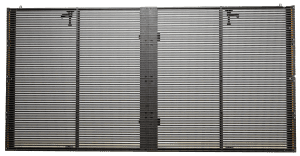
Muxwave by PixelFLEX: Transparent and versatile, Muxwave is a transparent LED display that adheres to glass and clear substrates, turning them into unobtrusive digital surfaces. Ideal for building facades, windows, and interior partitions, Muxwave allows natural light to pass through while maintaining a visible, dynamic message — perfect for integrators collaborating with forward-thinking architects and commercial design teams. 

Creative Possibilities That Fit the Space  

The beauty of a flexible LED display lies in its adaptability. Whether you’re building curved displays that wrap architectural columns, integrating transparent panels into glass storefronts, or creating modular systems for evolving performance spaces, today’s technology empowers integrators to bring those designs to life. 

PixelFLEX products like FLEXMod, FLEXTour, and Muxwave are engineered with these scenarios in mind, providing a versatile foundation for stunning architectural LED panels in commercial and creative spaces. Their flexible designs support custom installations across hospitality, retail, worship environments, and more — giving AV professionals the tools to turn structural constraints into impactful visual experiences.  

Functionality That Follows Form  

Creativity means little without reliability, especially when you’re managing complex installations on tight timelines. PixelFLEX’s flexible solutions aren’t simply visually distinct but engineered to perform under pressure. Lightweight yet durable construction, streamlined mounting systems, and responsive local service support make even the most complex flexible video wall deployments manageable.  

Every panel is backed by a U.S.-based service network, including pixel repair at the Nashville facility, where turnaround times beat overseas alternatives by weeks. For integrators, that means fewer headaches, faster fixes, and project  schedules that stay on track.  

How to Choose the Right Flexible Option  

To make the most of this technology, start by defining your installation environment and project needs:  

  • Need mobility and speed? FLEXTour is purpose-built for events, roadshows, and reconfigurable venues.  
  • Working with curved walls or permanent installations? FLEXMod delivers structural adaptability with robust performance.  
  • Want an ultra-modern look without blocking visibility? Muxwave lets you blend messaging with transparency, perfect for facades and glass installations.  

AV integrators who ask these questions up front streamline product selection and ensure performance aligns with client expectations.  

Quick Checklist: 5 Questions to Guide Flexible Display Projects  

  1. Is the display temporary or permanent?  
  2. Will it be installed on a curved or non-standard surface?  
  3. Does the location involve glass or transparency needs?  
  4. How important is fast servicing or pixel repair?  
  5. What’s the content strategy: dynamic visuals or subtle branding?  

By answering these questions early, integrators can narrow product selection, avoid surprises, and reduce costly redesigns later in the process. 

The Strategic Value of Flexibility  

While the initial cost of a premium architectural LED panel may exceed that of a basic rectangular screen, the payoff is long-term. Flexible systems reduce the need for custom framing,  simplify installation, and give integrators more design freedom to align with complex architectural concepts. They also create visual experiences that standard displays simply can’t replicate. 

Pair that with domestic service, tariff-resistant pricing, and product reliability, and the value becomes hard to ignore. In a saturated market where overseas competitors focus on quantity, PixelFLEX focuses on fit, function, and follow-through to help integrators deliver standout results with fewer post-installation headaches. 

Ready to Create a Display That’s Anything but Ordinary?  

Whether designing an immersive space, enhancing a commercial interior, or launching a visually unforgettable event, a flexible LED display can turn vision into experience.  

PixelFLEX partners with AV integrators, architects, and project teams to unlock the full potential of creative LED display solutions — with U.S.-based support, faster service, and a team built for complex installs and bold ideas.  

Contact us today to explore custom LED display options that fit your space and discover how far your design can bend. 

What to Know Before Installing an LED Screen for Events or Permanent Use  

Whether you’re outfitting a corporate atrium, a high-traffic retail environment, or a performance space with a demanding production schedule, choosing the right LED video wall isn’t a one-size-fits-all decision. The best solution hinges on a number of variables: resolution, curvature, indoor versus outdoor use, and how close viewers will be to the screen.  

PixelFLEX understands that the ideal LED video wall serves as more than just a screen. It becomes part of the environment — dynamic when powered on and, when needed, subtle enough to disappear into the background. Here’s how to make the right choice based on the realities of your installation space.  

Step One: Define the Viewing Distance  

Before digging into specs or aesthetics, start with a fundamental but crucial question: How far will your audience be from the screen? The answer will determine the pixel pitch — the distance between the diodes.  

Short viewing distances require tighter pixel pitches, which enhance clarity and minimize visual distortion. This detail matters if your display is in a conference room or retail store. For a stadium or concert hall, a higher pixel pitch works fine and reduces cost without sacrificing visual impact.  

Step Two: Indoor or Outdoor? Choose the Right Environment  

Environmental conditions directly impact both the longevity and performance of your LED video wall. An indoor LED display offers superior resolution options and a more lightweight frame for climate-controlled environments like boardrooms, houses of worship, or museum exhibits.  

On the other hand, a weather-resistant outdoor LED screen is essential when the display faces temperature fluctuations, humidity, or sunlight. PixelFLEX offers rugged yet visually striking outdoor LED screen models designed to hold up under environmental, lighting, and operational pressure.  

Step Three: Do You Need Flexibility?  

Some projects call for creativity beyond the flat rectangle. If your design vision includes architectural integration or nontraditional formats, a curved LED display can deliver the immersive effect you’re after. Whether wrapping around columns or sweeping across stages, curved and flexible panels allow for unique storytelling and visual flow.  

PixelFLEX is known for engineering curved LED display solutions that don’t just bend—they perform. And because these aren’t off-the-shelf panels retrofitted for a curve, the result is seamless and intentional.  

Step Four: Think Beyond the Screen  

While resolution and shape are important, other features elevate a screen from functional to exceptional. Remote diagnostics reduce maintenance time. Customizable modular systems allow for future expansion or rearrangement. And U.S.-based support ensures quick turnarounds when service is needed.  

It’s worth noting that PixelFLEX maintains its service and support operations in Nashville, which means faster repairs and no need to ship faulty parts overseas. For decision-makers juggling logistics, timelines, and budgets, local support can be the hidden factor that keeps everything on track.  

Step Five: Consider Multipurpose Usage  

Even if your primary installation is permanent, don’t overlook opportunities for events, seasonal promotions, or brand takeovers. Some businesses are choosing displays that can adapt to static and live-use formats. In these scenarios, selecting LED screens for events that are easy to reconfigure offers real value.  

Flexible product lines make it possible to invest once and deploy in multiple ways — without compromising image quality or technical reliability.  

Make the Smart Investment  

The display market is crowded with budget options, especially from overseas manufacturers. While lower prices might be tempting, long-term value lies in performance, service, and the ability to scale your solution over time. PixelFLEX’s U.S.-based engineering team designs display systems with long-term durability, technical precision, and responsive support built in from the start.  

From the first schematic to the final screen calibration, we build every LED video wall to meet the real-world demands of your project location. Whether you need an indoor LED display, a durable outdoor LED screen, or a custom-shaped curved LED display, the right solution is out there — and we’re here to help you find it.  

Contact PixelFLEX today to connect with our U.S.-based team and find the LED solution that fits your project, your space, and your goals. 

×
Need Help?
X

Ready to Talk?

Our team is ready to connect.