(800) 930-7954
Communicate worship schedules and sermon messages while engaging your congregation with visual technology.
View More
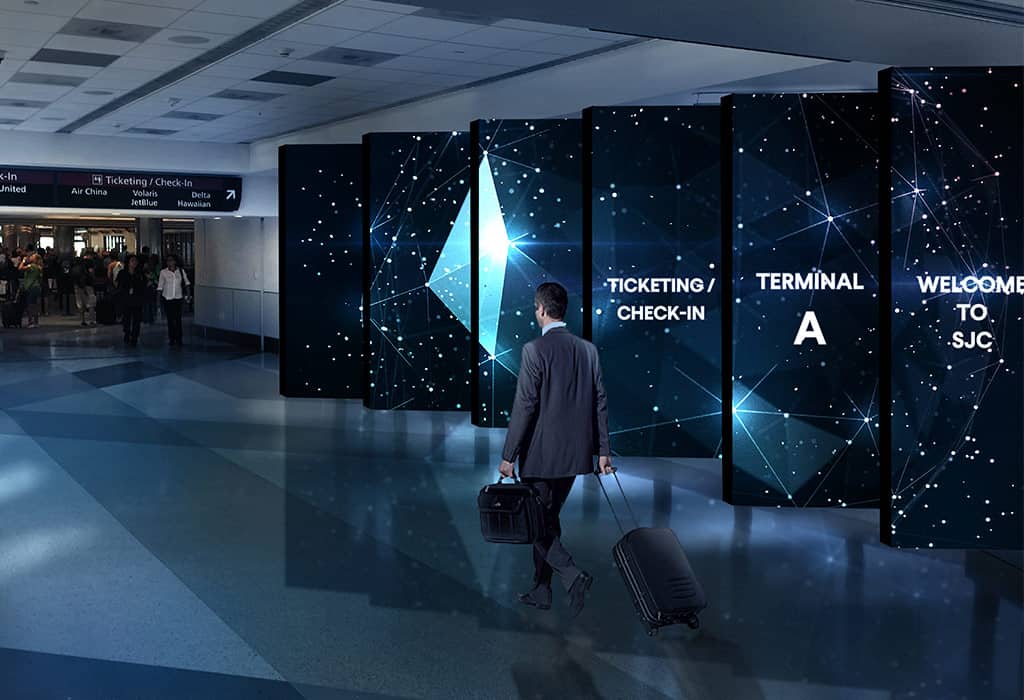
LED displays in transportation settings, such as airports, train stations, and bus terminals, serve as dynamic platforms for real-time information, advertising, and wayfinding, enhancing passenger experience with clear, up-to-date travel details and announcements.
View More
Differentiate yourself from the competition by incorporating a digital experience in your booth with our trade show LED displays.
View More
Communicate your brand’s message, stand out from the competition and engage your target market with LED digital signage.
View More
We offer creative solutions at cost-effective rates. You will be able to deliver your sermons more effectively and engage your congregation through one-of-a-kind lyric video walls and house of worship LED displays.
View More
Enhance ambiance, display interactive directories and wayfinding displays, and promote amenities and events to elevate the guest experience.
View More
Incorporate digital displays to enhance your students’ learning experience and market to prospective students and donors.
View More
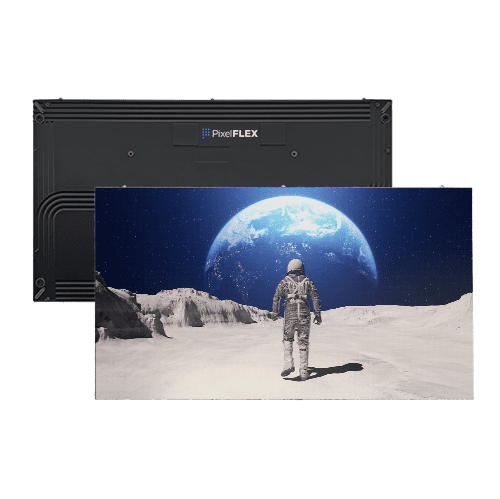
Transform your corporate spaces with PixelFLEX LED video displays. Enhance communication, elevate branding, and create dynamic environments.
View MoreQuick Take
PixelFLEX has officially launched the Year of the Partner: a company-wide commitment to reinvesting resources into the AV integrators who drive our business. This means deeper pre-bid support, stronger program terms, and direct engineering access on every project. A new partner program structure is coming soon. Here is what the shift means and why it matters for integrators looking for a long-term dvLED supplier relationship.
For AV integrators, the dvLED market has never been noisier. Dozens of suppliers compete for a spot on your bid sheet, most of them leading with price and promising support that rarely shows up when you need it most. At PixelFLEX, we have been watching this pattern long enough to know exactly what it costs integrators: margin erosion, jobsite surprises, and the slow erosion of client trust that comes from working with vendors who disappear after the sale.
We built something different. And this year, we are leaning further into it.
We are calling it the Year of the Partner.
The Year of the Partner is a formal declaration of where PixelFLEX is placing its investment in 2026. Rather than concentrating resources on brand visibility, we are directing that investment toward the integrators who do the work: the teams quoting dvLED projects, managing installs, and building the client relationships that drive repeat business.
This is not a rebrand. It is a realignment of our priorities based on a simple belief: when our integrator partners succeed, we succeed. The best way to grow PixelFLEX is not to shout louder in a crowded market. It is to show up better on every project.
“We are not a box shipper. Bring us in at the bid stage and we will be there through final calibration and beyond.”
If you have been doing LED installs for more than a few years, you already know the list. Overseas support queues. Documentation that does not match what ships. A sales rep who goes quiet the moment the PO is signed. A product that arrives on-site with no pre-testing and three surprises waiting inside the crate.
The cost is not just operational. It is reputational. Every friction point on a dvLED install reflects on the integrator, not the supplier. Your client does not know who made the panels. They know who sold them the system and who is standing in the room when something goes wrong.
That is the problem the Year of the Partner is designed to solve.
The Year of the Partner is built on a set of commitments we are making to our integration partners across the full project lifecycle. Here is what that looks like in practice:
Bring us in before you submit. We provide pre-bid drawings, specification support, and system design collaboration so your proposal is accurate, competitive, and free of the spec surprises that cause budget blowups later.
Every PixelFLEX display ships rack-ready, signal-ready, and pre-tested from our Mount Juliet warehouse. What arrives on-site is what we said it would be: documented, validated, and ready to perform. No workarounds. No spec drift. No mid-install discovery calls.
Our support team is in the same time zone as your jobsite. No overseas queues, no language barriers, and no waiting until Monday morning to get an answer. We operate at the pace the job requires.
Our involvement does not end at commissioning. Post-install warranty, service infrastructure, and ongoing engineering access are part of how we work. When your client calls with a question two years after installation, you have someone to call.
We invest in making our partners more knowledgeable, not just better equipped. Training resources, sales enablement tools, and education opportunities are built into the partnership because an informed integrator wins more work and delivers better results.
The Year of the Partner is also the launchpad for something we are building toward: a new, formalized partner program structure that puts additional benefits, terms, and resources behind the integrators who are serious about growing their dvLED practice with PixelFLEX.
We are not ready to announce the full details yet. But we will be soon. What we can say is that the program is being designed around the things integrators have told us they actually need: margin protection, reciprocal lead support, clearer tier structures, and the kind of accountability that makes a supplier worth specifying over and over again.
If you have ever wished your LED supplier would show up the way a real partner does, we built this for you.
A PixelFLEX integration partner has access to pre-bid engineering support, integration-ready dvLED products pre-tested from our Mount Juliet facility, U.S.-based technical support, training resources, and post-install lifecycle service. The partnership is designed to reduce jobsite risk and protect the integrator’s reputation on every project.
PixelFLEX provides pre-bid drawings, specification support, and engineering collaboration before you submit your proposal. This helps integrators build accurate, defensible bids and reduces the risk of scope changes or pricing surprises once the project is awarded.
Yes. PixelFLEX is headquartered in Mount Juliet, Tennessee. Products are pre-tested and validated at our domestic facility before they ship. Our support team is U.S.-based, operates in the same time zones as our integration partners, and is reachable on the timeline a working project demands.
PixelFLEX offers a full line of dvLED display solutions including FLEXThin, FLEXUltra, and custom integration options designed for standard and complex installations. All products are engineered with AV integration in mind: rack-ready, signal-ready, and fully documented for clean, efficient installs.
The new partner program structure is currently in development and will be announced soon. AV integrators who are already working with PixelFLEX or who want to learn more before the formal launch can visit our partner program page for current details and to connect with our team.
If you are an AV integrator evaluating dvLED suppliers for your next project or long-term supplier strategy, the Year of the Partner is a good time to take a closer look at what PixelFLEX offers. The partner program page has current details on how the relationship works, what is included, and what our integration partners say about working with us.
The new program structure is coming. Get ahead of it.
Learn More about the PixelFLEX Partner Program
LED installs do not go wrong because integrators are careless. They go wrong because the information needed to prevent a problem often sits with the supplier, and that supplier is not always in the conversation early enough to share it.
Experienced integrators know this pattern. The structural issue that did not show up in the drawings. The unit that arrived looking fine but behaved unexpectedly on power-up. The commissioning session that ran three hours over because documentation was missing. None of these are catastrophic individually. Combined, they erode margin, delay timelines, and create conversations with clients that no one wants to have.
The good news is that most common dvLED jobsite surprises are preventable. Not by working harder on site, but by engaging the right supplier earlier in the process.
Here are five of the most common, and what the prevention actually looks like.
This one tends to surface at the worst possible moment: the crew is on site, the wall is framed, and something about the mounting surface, load capacity, or power infrastructure does not match what the drawings showed.
Structural surprises on LED installs come in a few varieties. The wall behind the finished surface is not what was specified. The ceiling load rating does not support the rigging plan. The power runs are not where the electrical drawings said they would be, or the circuit capacity is insufficient for the display configuration.
The prevention starts well before anyone sets foot on site. Pre-bid elevation drawings and custom shop drawings give the installation team a clear picture of how the display fits into the actual space, not just a theoretical one. When a supplier provides these documents as part of their standard engagement, structural issues get surfaced during planning, not during installation. That is the difference between a design revision and a jobsite problem.
Power requirements should also be spelled out clearly at the specification stage. A supplier who understands the install environment and asks the right questions early can flag potential power issues before they become the electrician’s emergency on install day.
A display that arrives looking fine and then fails to perform as specified during commissioning is one of the most frustrating jobsite experiences in this industry. It is also one of the most avoidable.
The root cause is almost always a QC process that was not rigorous enough before the product left the facility. A unit that has been through component inspection, third-party acceptance testing, and a full pre-build that verifies wiring, power, and content playback is a unit that should not surprise you on site. A unit that has only been visually inspected or run through a basic power-on test is a unit that might.
The question to ask any supplier is not whether they test their products. It is what the test actually involves and at what point in the build process it happens. Three separate checkpoints across the build, each catching different failure modes, is a meaningful commitment. A general quality assurance claim is not.

A display that performs on day one is not luck. It is the result of a QC process that was thorough enough to catch problems before the product left the building.
Missing or incomplete documentation is one of the most common sources of delay on LED installs, and one of the least visible until you are on site and need something you do not have.
The forms this takes vary. Wiring diagrams that do not match the actual configuration delivered. Signal routing documentation that was not included in the shipment. Installation guides that reference a previous product version. Cabinet layout drawings that do not reflect the custom configuration ordered.
Each of these adds time. A commissioning session that should take two hours stretches to five. A question that should have a clear answer requires a call to the supplier, who may or may not be reachable at that moment. The project that was supposed to hand off on Tuesday slips to Thursday.
Complete documentation should be part of every order, not something that has to be requested after the fact. That means elevation drawings, shop drawings, signal routing documentation, wiring diagrams specific to the configuration delivered, and installation guides that match what arrived on the truck. When documentation is treated as a standard deliverable rather than an afterthought, commissioning runs on schedule.
Signal routing and content compatibility problems have a way of surfacing during commissioning, which is about the worst time to discover them. The display is up, the client may be present, and a configuration issue that should have been resolved in pre-production is now being worked through in real time.
The most common scenarios involve mismatches between the content management system and the display controller, signal chain gaps that were not mapped during pre-production, or resolution and refresh rate configurations that were not confirmed against the content being played.
These issues are preventable with early engagement. A supplier who asks about the content environment, the signal chain, and the CMS at the specification stage can flag compatibility considerations before they become commissioning problems. A supplier who only finds out about these details when product arrives on site is a supplier who is discovering the problem at the same time you are.
Rack-ready and signal-ready configurations eliminate a large portion of these issues by design. When the display system arrives pre-configured for the signal environment it is going into, there are fewer variables to resolve on site.
Signal and content compatibility issues discovered during commissioning are almost always pre-production problems. The conversation that prevents them happens at the bid stage.
This one does not show up on installation day. It shows up three months later when something needs attention and the supplier who was responsive during the sale is suddenly difficult to reach.
For integrators, the post-install period is where the client relationship is either strengthened or damaged. A display that performs reliably and has a support team behind it gives the integrator confidence and gives the client a reason to call back. A display that requires chasing an overseas support queue for warranty service puts the integrator in an uncomfortable position with a client who does not care whose fault the problem is.
Post-install support quality is almost impossible to evaluate from a spec sheet. The questions to ask before committing to a supplier are direct:
A supplier who answers these questions clearly and specifically before the sale is a supplier whose post-install support is likely to hold up. Vague answers are a pattern worth taking seriously.
Look at these five surprises and a pattern emerges. Most of them are not installation problems. They are pre-installation problems that surface during installation because the right conversation did not happen early enough.
Structural issues are caught in drawings reviews. DOA units are caught in thorough QC. Documentation gaps are closed before the shipment leaves. Signal compatibility is confirmed during pre-production. Post-install support is evaluated before the order is placed.
The supplier who prevents these problems is the one who is engaged early, asks the right questions, and treats the bid stage as the beginning of the project rather than the beginning of the sale. That is what a real partnership looks like in practice.
PixelFLEX engages at the bid stage because that is where most jobsite problems are actually solved.
Pre-bid drawings, triple QC, complete documentation, and U.S.-based support that picks up the phone are built into every project we run. If you want to talk through what that looks like on your next install, the conversation starts below.
Talk to PixelFLEX at the bid stage: PixelFLEX Partner Program is where that conversation starts.
Tariffs have been part of the Pro AV conversation for a while now. But in 2026, the conversation has shifted. It is no longer about whether tariffs might affect pricing. It is about what supply chain volatility is actually costing integrators on live projects, and how the choice of supplier either insulates you from that risk or exposes you to it.
If you source dvLED products from overseas suppliers, you are absorbing uncertainty at every stage of the order: pricing that can shift between quote and delivery, lead times that stretch without warning, support that operates on a different schedule than your jobsite, and documentation that may not reflect what actually arrives on the truck.
None of that is hypothetical. It is the pattern that integrators who have been through it describe in plain terms: the project that almost missed a grand opening because product was held in customs, the display that arrived with a configuration discrepancy that took three days to resolve across time zones, the warranty claim that went quiet for six weeks.
Understanding why these things happen, and how to avoid them, starts with understanding what domestic sourcing actually changes.
The headline impact of tariffs is price. But price is not always the most damaging part for integrators.
The more disruptive issue is uncertainty. When tariff rates shift between the time a project is quoted and the time product is ordered, the margin calculation changes. When a supplier’s overseas warehouse is navigating new compliance requirements, lead times stretch. When product is flagged at the border, installation schedules slip. None of these are the integrator’s fault, but the integrator is the one explaining the delay to the client.
For design consultants, the risk is different but equally real. A spec built around a product that is suddenly subject to significant import cost increases can put a project in a difficult position at bid time. A substitution made under budget pressure mid-project is rarely a clean swap. It creates documentation gaps, calibration questions, and liability exposure that the original spec was designed to prevent.
The cost of supply chain disruption is rarely just the product. It is the timeline, the client relationship, and the margin on the next project too.
When a dvLED supplier designs, engineers, and builds product at a U.S. facility and operates their support infrastructure domestically, the tariff conversation changes fundamentally.
Custom-built product is engineered and assembled specifically for each project at a domestic facility. That means the supply chain exposure that comes with overseas fulfillment, shifting import costs between order and delivery, unpredictable lead times, and customs delays, is removed from the equation. Lead times are defined by the build, not by port clearance or international freight schedules. And when something needs to be addressed before or after delivery, the conversation happens during your workday with a team that understands your project context.
That is not a minor operational convenience. For an integrator with a hard deadline and a client who expects a seamless installation, it is the difference between a project that runs on schedule and one that does not.
Building product domestically also changes what pre-delivery QC looks like. When product is engineered and assembled at a U.S. facility, it is possible to run meaningful quality checks before it leaves: component inspection, third-party testing, a full pre-build that verifies wiring, power, and content playback. Overseas suppliers can claim QC processes too, but verification and accountability are harder to maintain across that distance when the build happens on the other side of the world.
Support quality is one of the most underweighted factors in supplier selection, and it is one of the places where overseas sourcing creates the most friction on live projects.
When a display arrives on site and something needs to be addressed fast, a support team that is eight to twelve hours ahead of your time zone is effectively unavailable during your working day. An email sent at 9 a.m. on a Tuesday gets a response the following morning. If commissioning is happening that afternoon, that gap matters.
U.S.-based support means your questions get answered in real time, by people who can look up your order, pull your documentation, and help you solve the problem before the client notices there is one.
This is not a small thing on a project where reputation is on the line. The integrator who can make a problem disappear before the client sees it is the integrator the client calls back for the next project.
Every hour of time-zone friction on a live project is an hour the integrator is carrying a problem alone. That should not be the default.
Evaluating a supplier’s supply chain exposure is not complicated, but it requires asking direct questions. Here is what to cover:
A supplier who can answer all of these questions clearly and specifically is a supplier whose supply chain you can rely on. Vague answers to direct questions are a pattern that will repeat itself when the pressure is on.
The dvLED market is not going to get less complicated in the near term. Tariff policy continues to shift, supply chains are still adjusting, and the integrators who are building their businesses around suppliers with U.S.-based operations are the ones who are insulating themselves from the disruption everyone else is absorbing.
For design consultants, this is also a specification conversation. Specifying a supplier with U.S.-based operations, documented QC, and domestic support is a form of risk management. It protects the spec through construction, reduces the likelihood of a substitution under budget pressure, and gives the project team a reliable point of contact throughout the installation and beyond.
The choice of supplier has always mattered. In a market defined by supply chain volatility, it matters more than it ever has.
PixelFLEX designs and builds custom dvLED solutions from our facility just outside of Nashville, Tennessee. Every display is engineered for the project, QC-tested before it ships, and supported by a U.S.-based team available during your workday. Select pixel pitches of our most popular product, FLEXThin, are also available for fast-turn projects. Our support team stays involved from the bid stage through post-install. If you want to see what that looks like as a formal partnership, the PixelFLEX Partner Program is where that conversation starts.
It is about finding the partner that shows up when it counts, understands what your business needs, and has the process behind it to back that up. For AV integrators, that distinction matters more than most clients ever see.
The product spec sheet is easy to compare. Resolution, pixel pitch, brightness, warranty length. These are table stakes. What is harder to evaluate before you commit to a project is everything else: how a supplier handles a jobsite problem at 7 a.m. on a Tuesday, whether their products actually arrive ready to install, and whether they are still picking up the phone six months after the order shipped.
Here is a practical framework for evaluating any dvLED supplier before you put your reputation on the line.
1. U.S.-Based Support Is an Operational Requirement, Not a Preference
This one sounds obvious until a project hits a snag and you find yourself waiting 48 hours for a response from an overseas support queue in a different time zone.
U.S.-based support means your questions get answered during your workday. It means technical documentation arrives in plain English. It means when something needs to be resolved fast, someone who understands your project and your timeline is the one resolving it.
The AV industry has learned this lesson the hard way through overseas suppliers who look competitive on paper but cannot deliver the support that keeps a project on track. If a supplier cannot clearly tell you where their support team is located and what their response time commitment is, that is your answer.
2. QC Process: Ask What Actually Happens Before It Ships
Every supplier claims their products are high quality. Very few can tell you what that means operationally.
A meaningful QC process has checkpoints you can name. Component inspection before assembly. Third-party acceptance testing. A full pre-build that verifies wiring, power, and content playback before the unit leaves the facility. These steps take time and they cost money, which is exactly why not every supplier does them.
When you ask a supplier about their QC process, listen for specifics. “We test everything before it ships” is not an answer. “Every display goes through component inspection, third-party testing, and a full pre-build at our facility” is an answer.
The difference shows up on your job site. Units that arrive pre-tested commission faster, perform more predictably, and generate fewer callbacks. That is time and margin back in your project.
The question is not whether a supplier has a QC process. It is whether they can describe it step by step.
3. Documentation-Ready Means It Is Actually Ready
Documentation gaps slow commissioning more than most integrators expect. Missing drawings, incomplete spec sheets, signal routing that was not documented, wiring diagrams that do not match what arrived on site. Any one of these adds hours to a project. Combined, they can derail a timeline entirely.
A supplier worth working with provides complete documentation as part of the standard delivery, not as an afterthought. That means elevation drawings, detailed shop drawings, accurate spec sheets, and clear installation guides. If you are having to chase documentation after an order is placed, that is a pattern that will repeat itself on every project.
For design consultants and specifiers, this matters even earlier in the process. Pre-bid drawings and specification documentation that holds up through construction administration is a direct extension of your work. Your supplier’s documentation quality is a reflection on yours.
4. Lifecycle Commitment: Where Are They After the Install?
Post-sale support separates transactional vendors from actual partners. The question to ask is simple: what does the relationship look like after the display is commissioned?
The honest answer from a strong supplier involves warranty terms that are clearly stated, a service team that can address issues remotely or on site, and a company that is still reachable and engaged years after the sale.
Ask specifically about warranty length and what it covers. Ask about remote monitoring options. Ask what the process looks like for a warranty claim or a replacement component. If those answers are vague or involve overseas logistics, plan accordingly.
Clients measure an integrator’s performance over the life of the installation, not just on day one. Your supplier’s lifecycle commitment is part of how you protect that relationship.
5. The Bid Stage Test
Here is a simple way to evaluate whether a supplier is actually a partner or just a vendor: invite them in at the bid stage.
A supplier who engages early can provide pre-bid drawings, help you spec the right product for the environment, flag structural or power considerations before they become jobsite surprises, and give you the engineering support to put together a proposal your client can trust.
A supplier who only shows up after the purchase order is signed is a vendor. They may have good products. But when the project gets complicated, which LED projects sometimes do, they are not the partner who is going to help you solve it.
The best test of a supplier is how useful they are before you spend any money. Bring them in early and see what they do with it.
6. Red Flags Worth Knowing
A few things to watch for in any supplier conversation:
The dvLED market has no shortage of suppliers willing to take your order. The ones worth building a business around are the ones who understand that their job does not end at the sale. They show up at the bid stage, deliver products that are ready to install, answer the phone when something goes wrong, and remain accountable after the project closes.
That kind of partnership is not universal in this market. But it exists, and it is what you should be looking for.
U.S.-based support, triple QC, complete documentation, lifecycle commitment, and early-stage engineering engagement are not premium add-ons. They are how every PixelFLEX project runs. If you want to see what that looks like in practice, the conversation starts at the link below.
Learn more about the PixelFLEX Partner Program.